

Concept for Breville — 03
The Ritual
A gooseneck kettle reimagined through the lens of matcha preparation — where precision meets tradition.
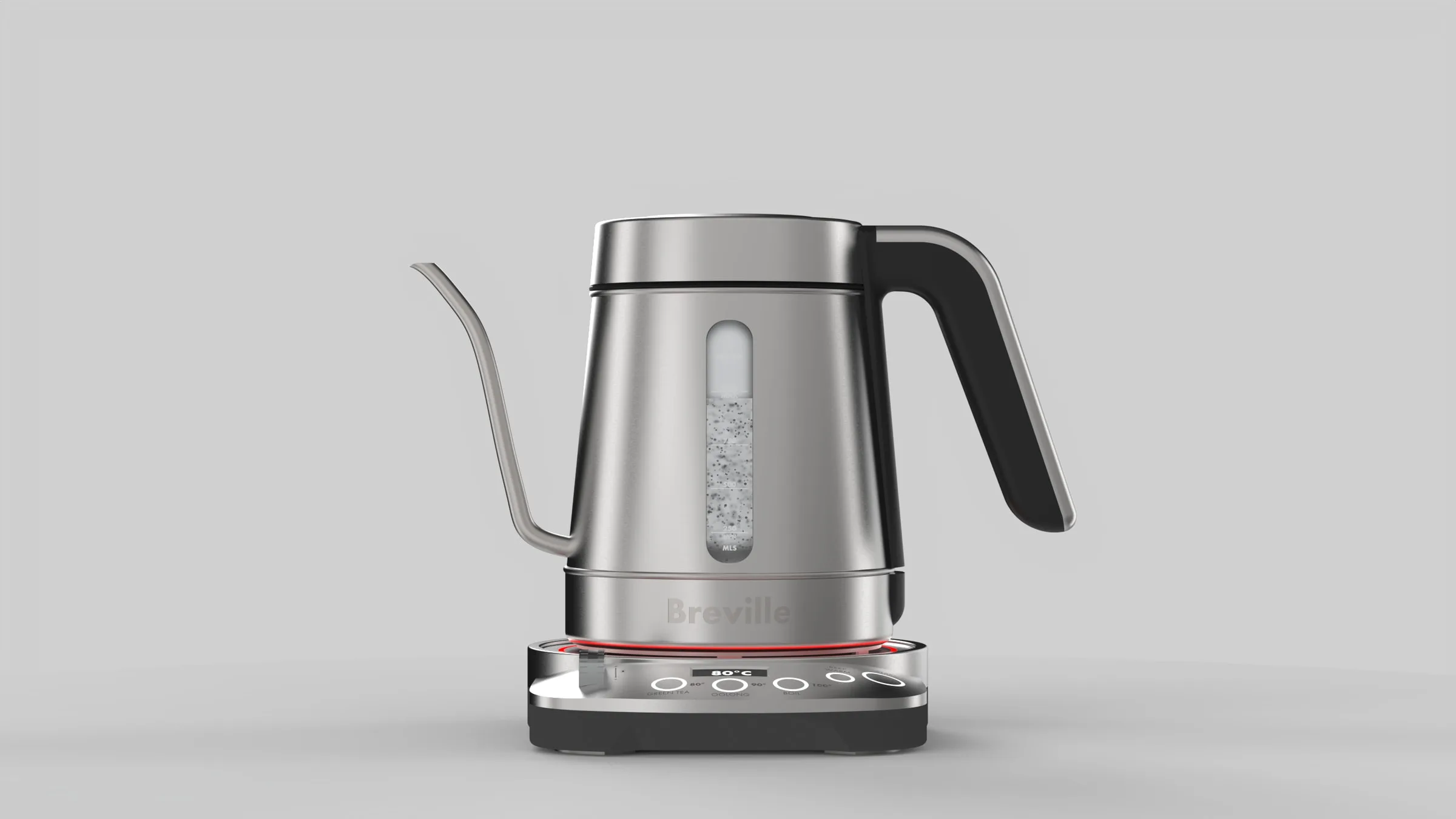
The brief
Breville make precise kitchen appliances. Matcha asks for precision too — water off the boil, poured slowly enough not to clump the powder. The two ought to meet, and mostly they don't: gooseneck kettles are built for pour-over coffee and priced for enthusiasts.
How might we design a more compact, precise and ergonomically tailored gooseneck kettle that supports the ritual of matcha preparation?
Research
Four people who make matcha every day.
Three interviews and an observation session. I sat with people who make matcha daily and watched where their kettles got in the way — what they reached for, what they had to do twice, what they had learned to put up with.
What mattered
- Precise temperature control, to the degree
- Spout pour rate affects the quality of the matcha
- Compactness matters in a daily ritual appliance
- Safety comes from visible, intentional actions
What got in the way
- Kettles are often too large for enthusiast users
- Larger kettles take longer to heat
- Small openings are harder to clean inside
- Traditional lids need two hands when pouring
Ideation
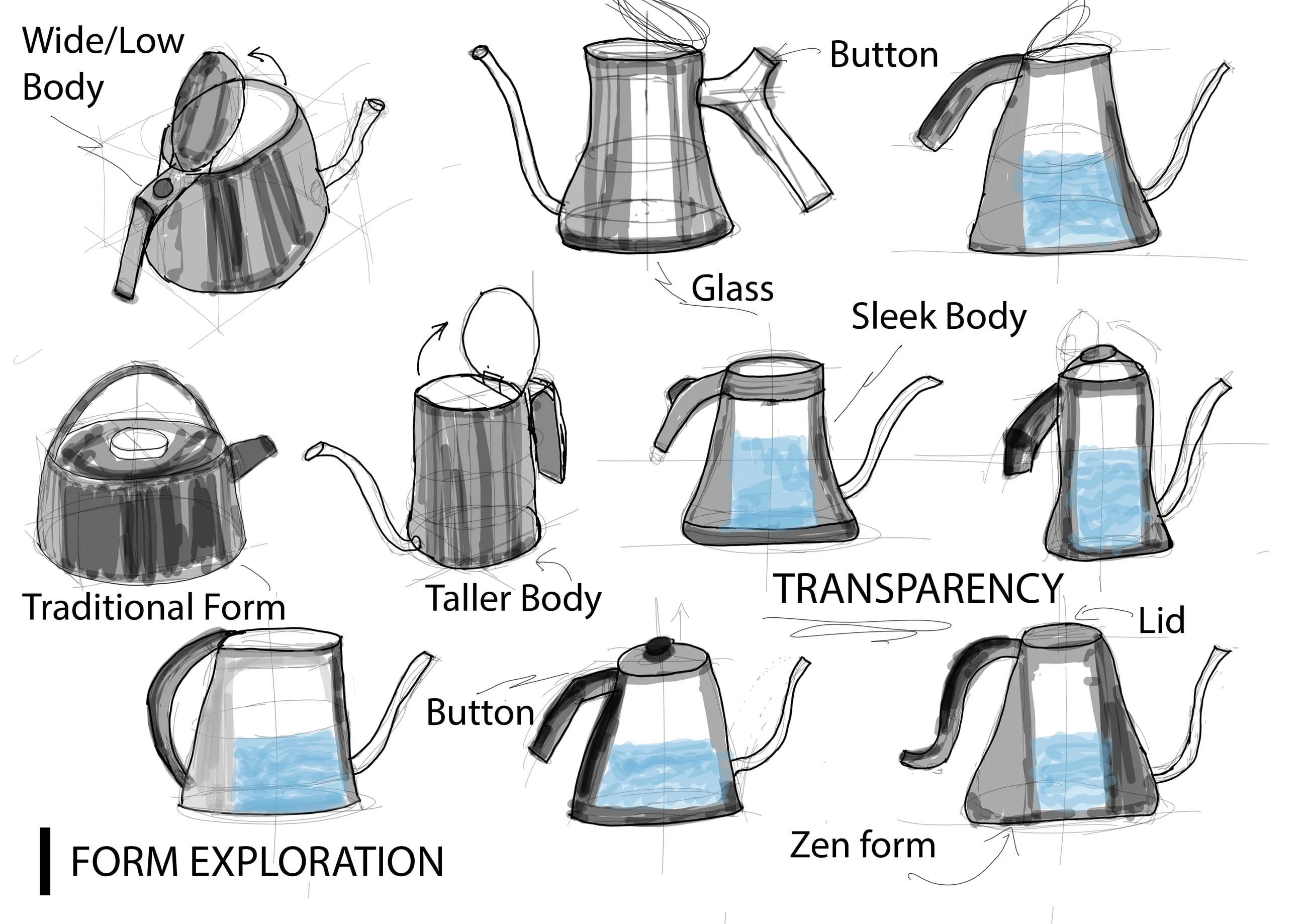
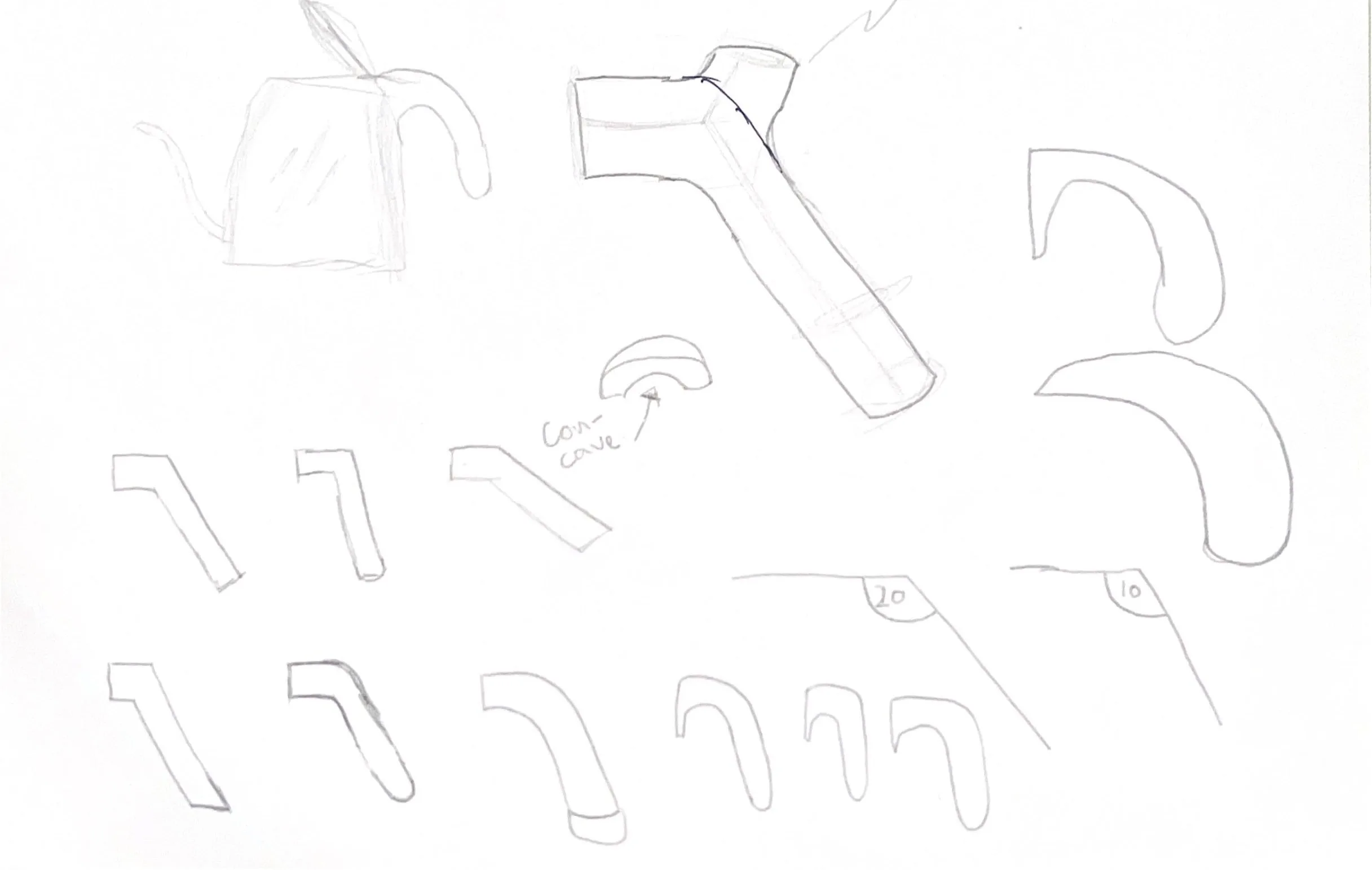
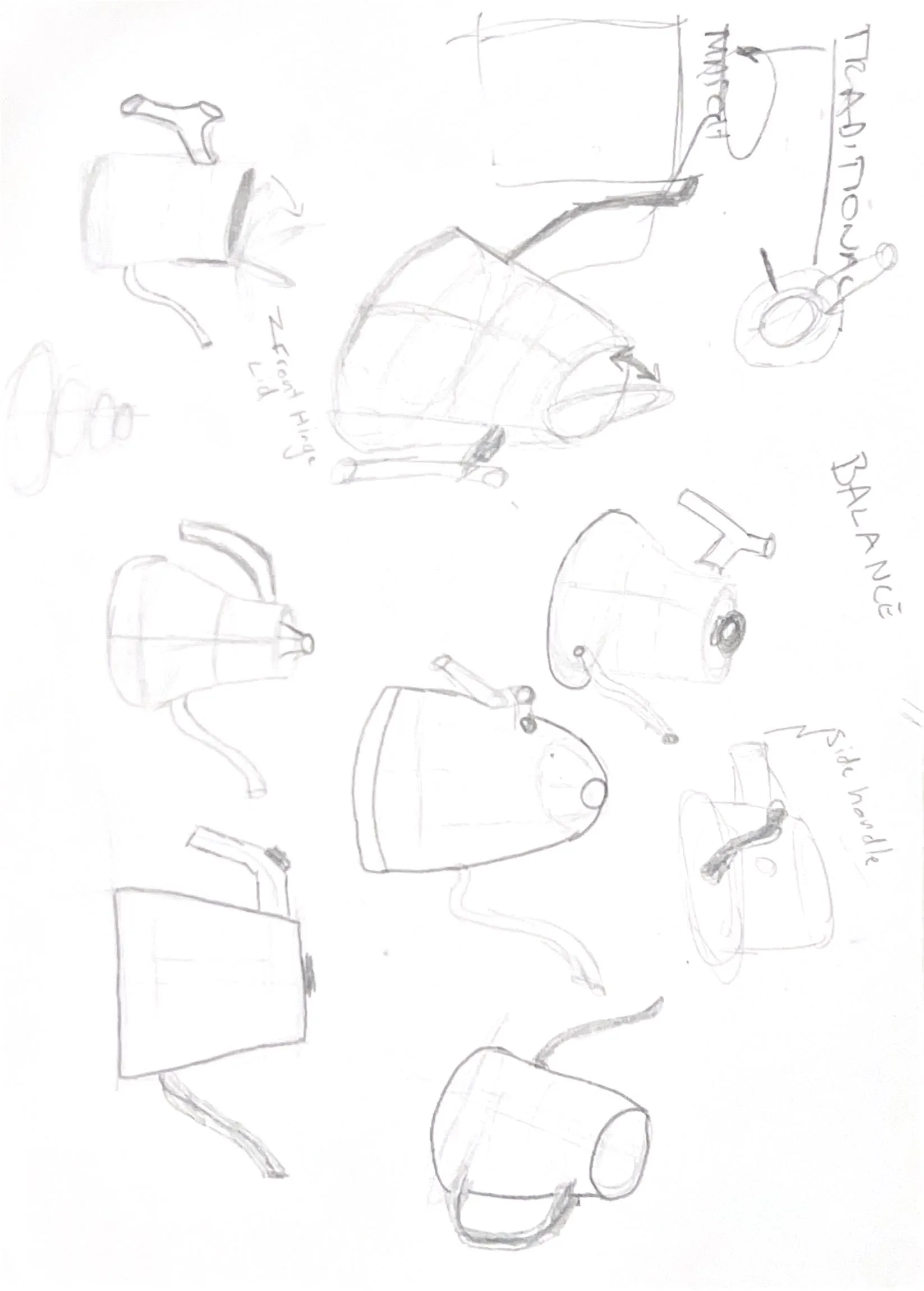
Silhouette, spout curvature, thumb reach.
Physical development
Built in foam and card before it was built in CAD.
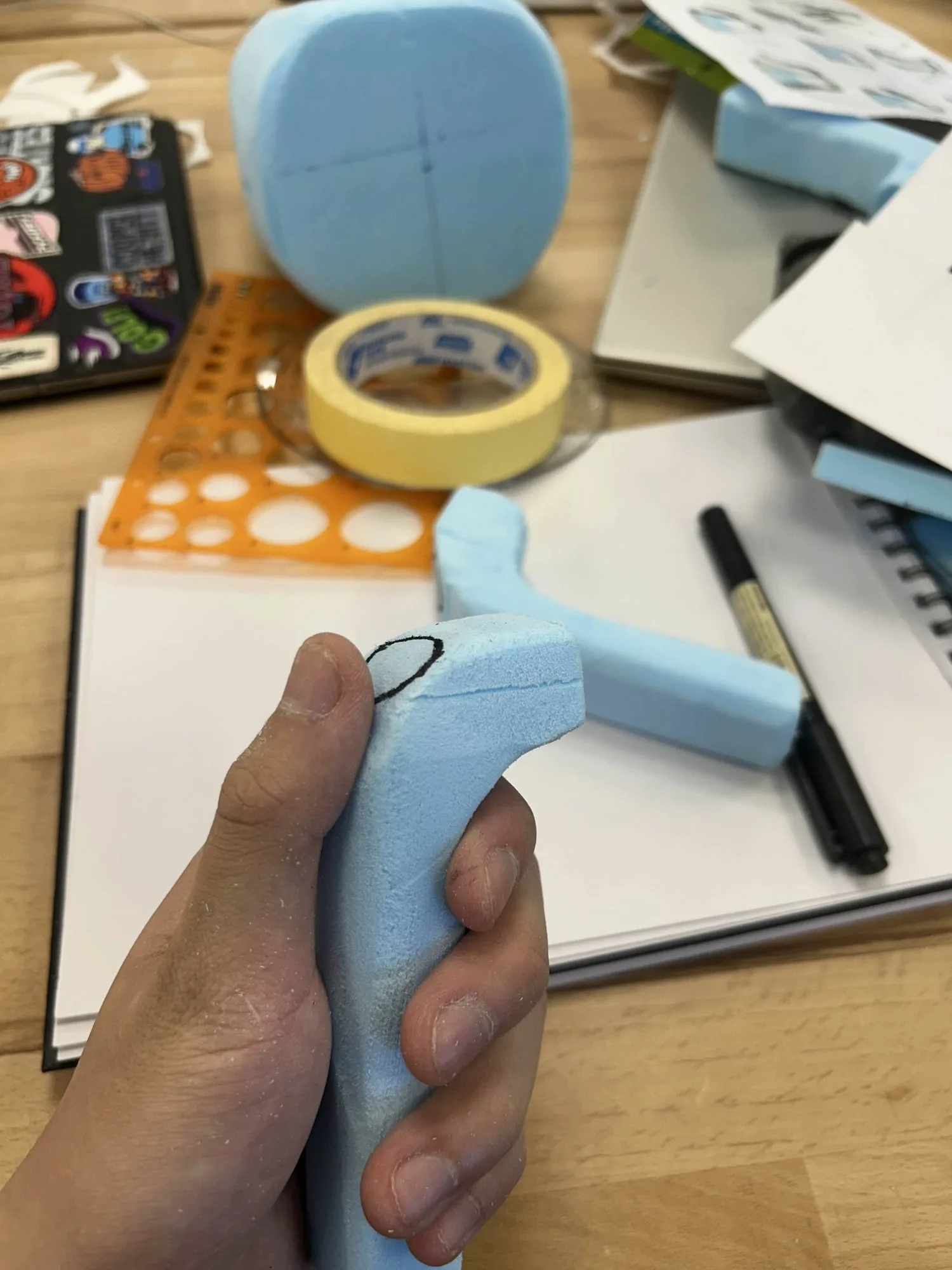
Foam and card models tested proportion, lid placement and grip early, on the benchtop where the kettle would actually live.
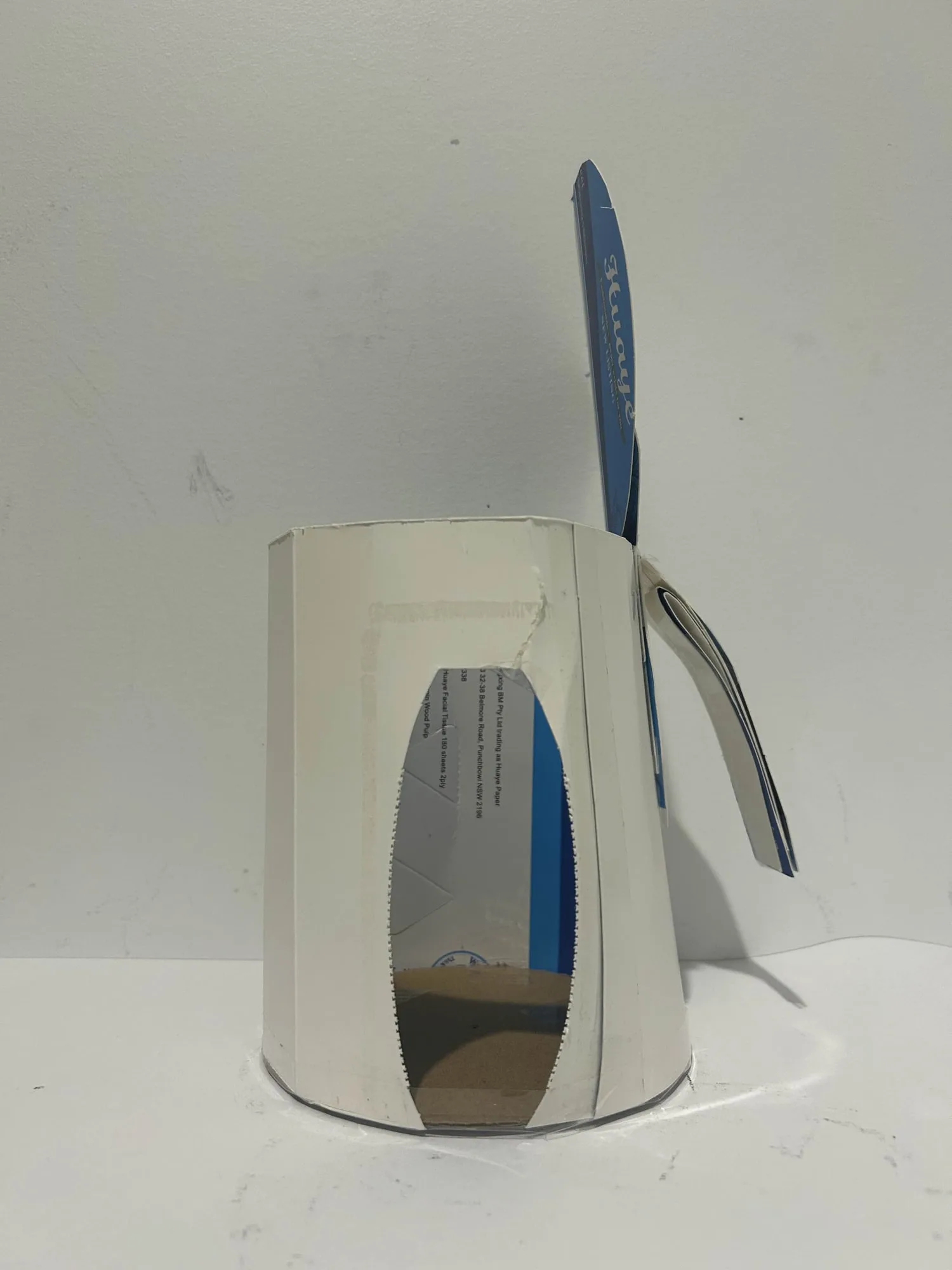
Card and foam — proportion and lid placement 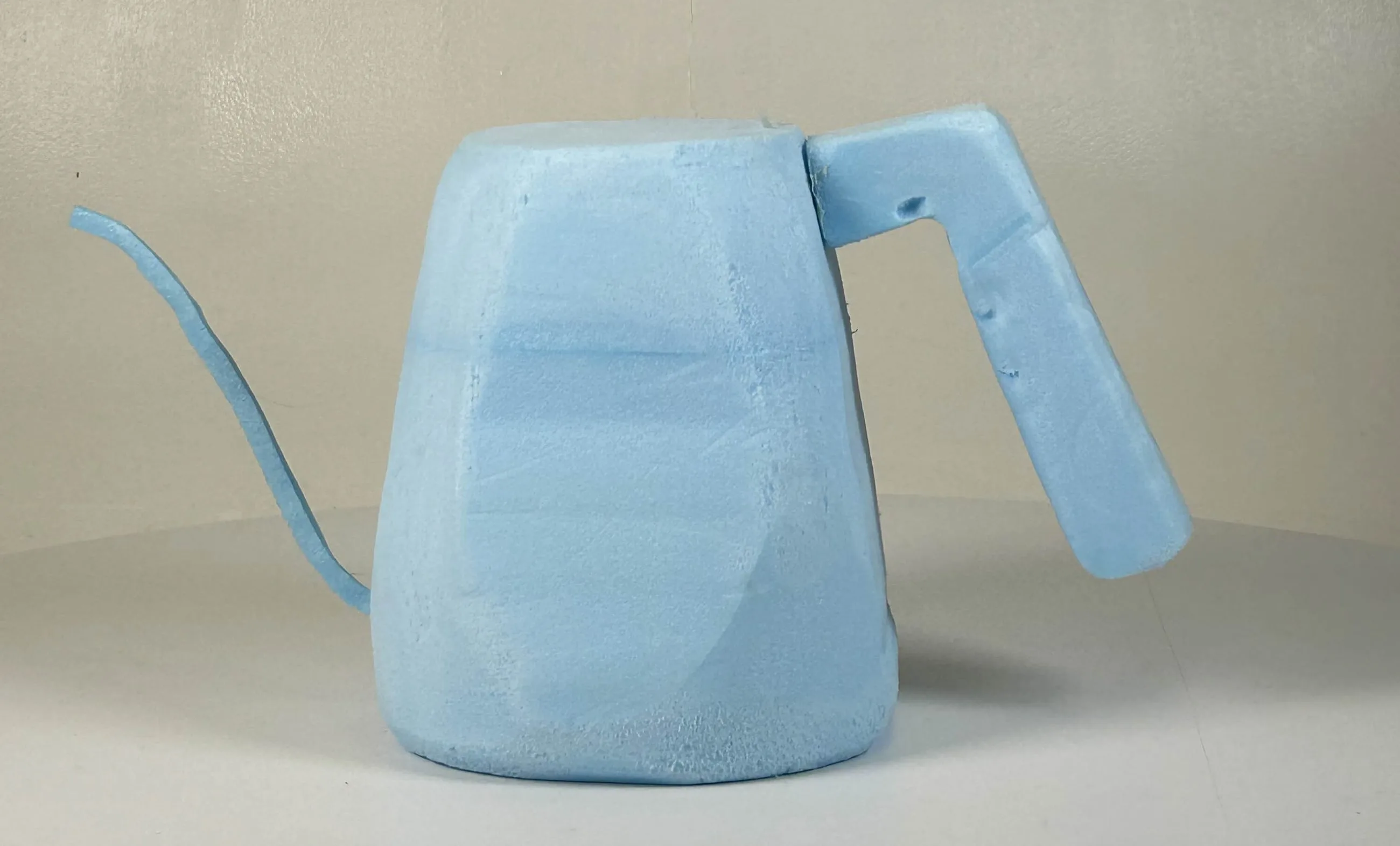
Rough foam model 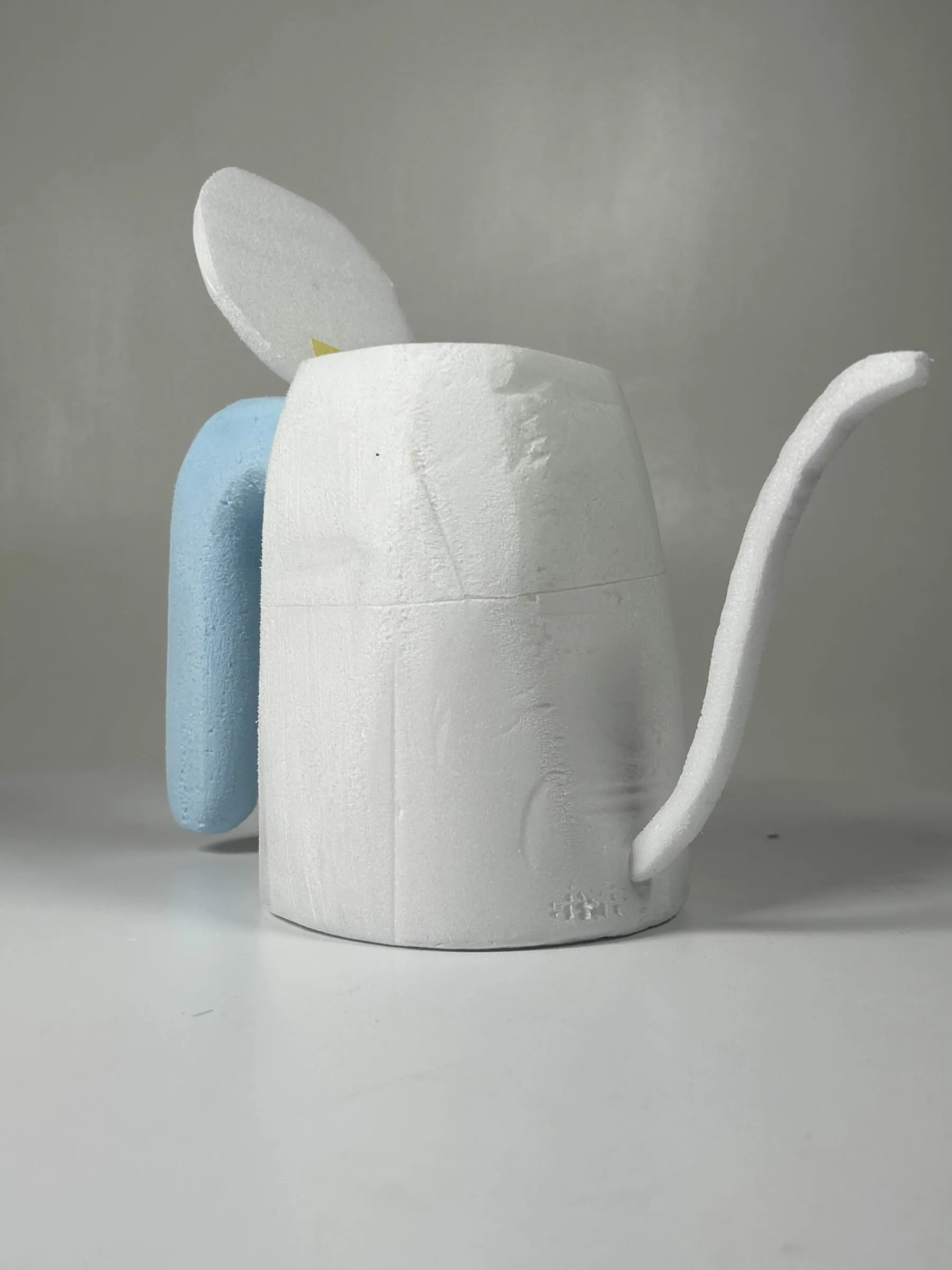
Refined foam model 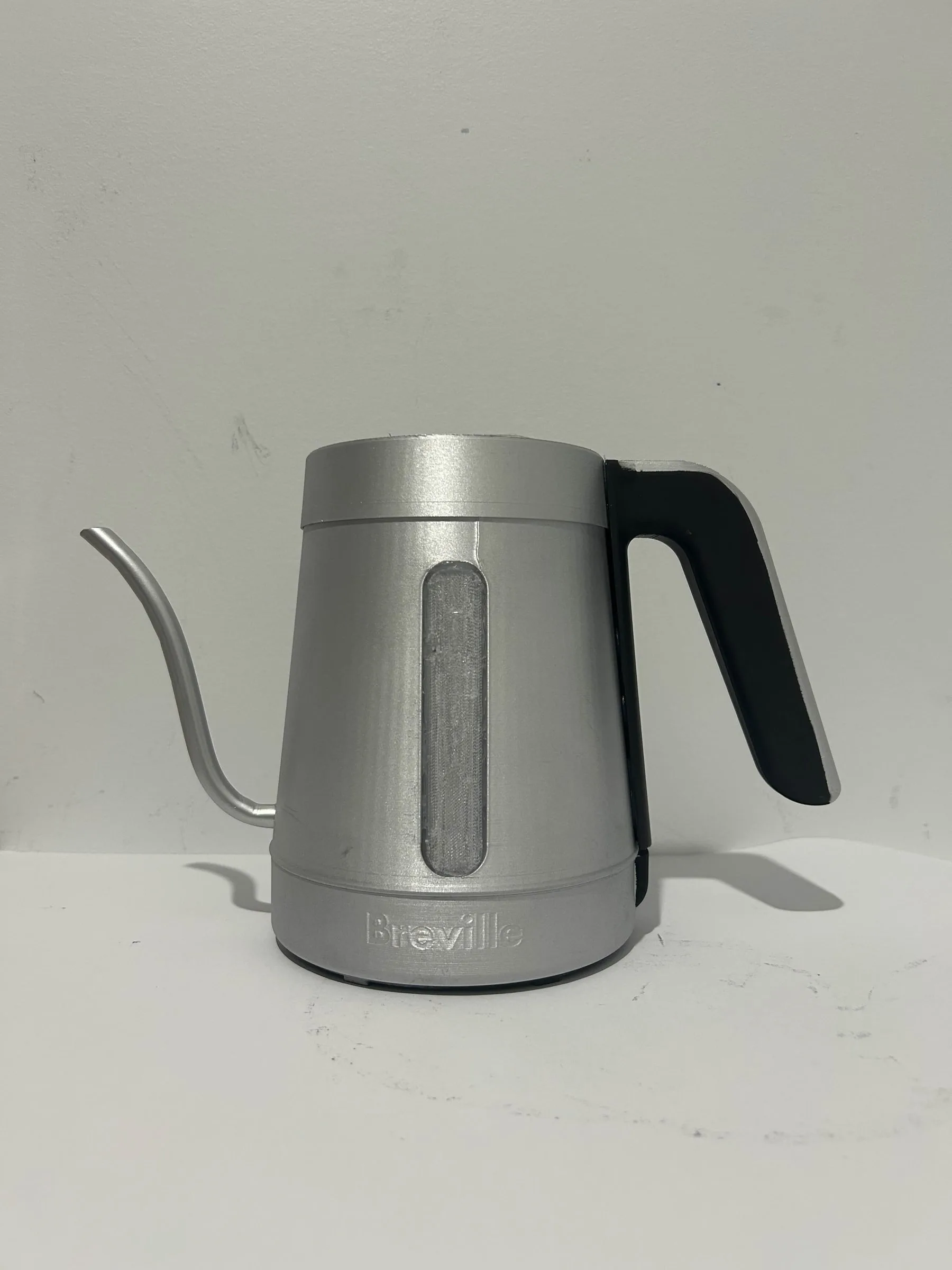
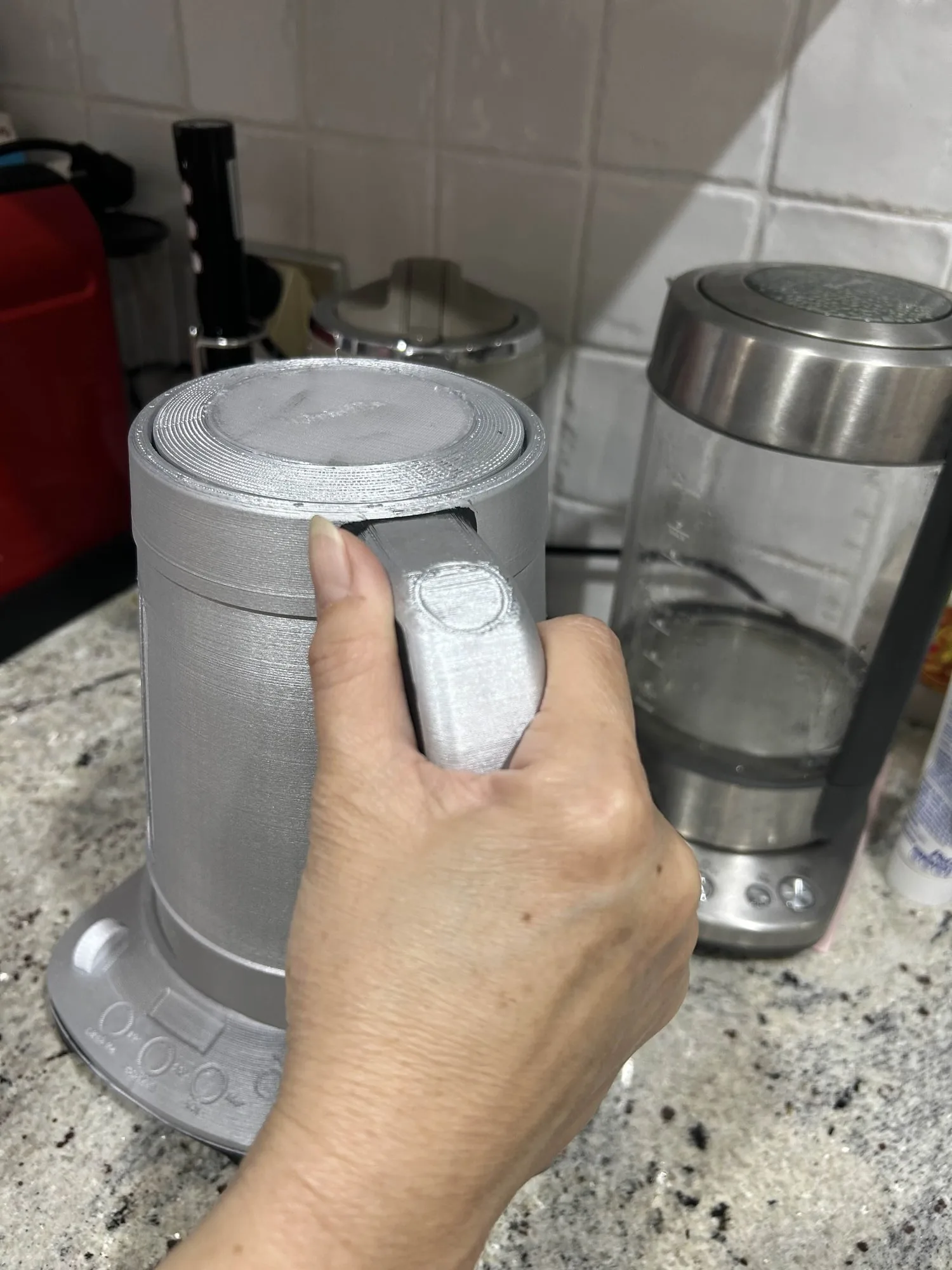
3D-printed model
The handle
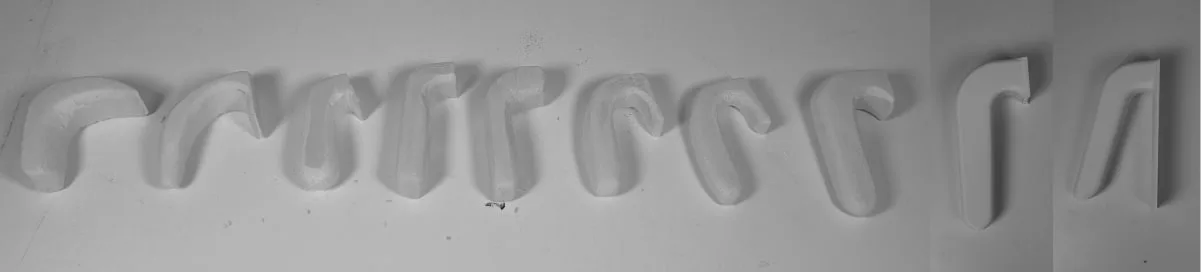
Users had told me round handles were uncomfortable and bulky ones worse. I mocked up a row of profiles and held every one of them.
The one that won tapers for thumb support and aligns with Breville's existing minimal form language — enough to grip confidently one-handed, without the slab of plastic most kettles give you.
The spout
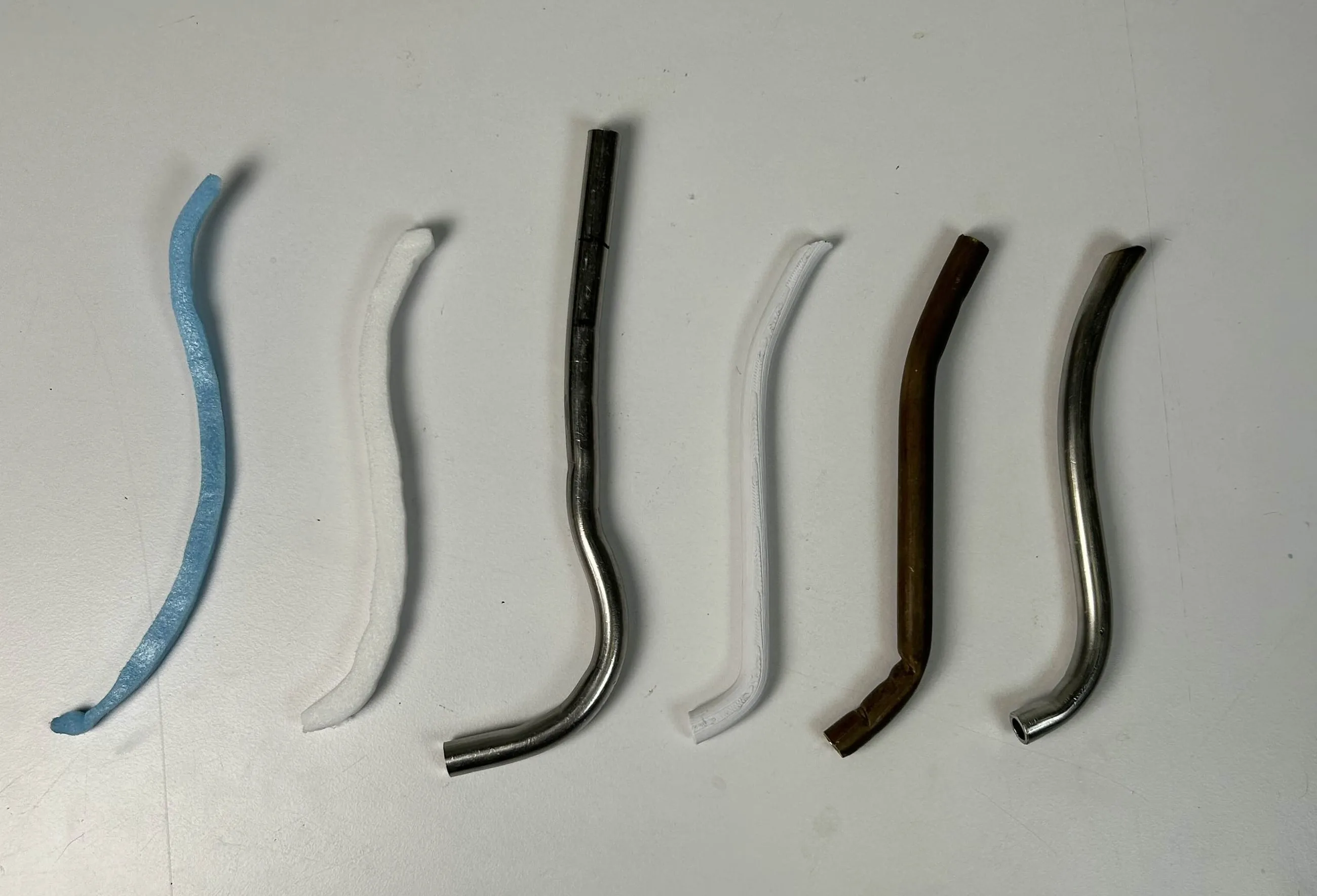
Inconsistent or fast pours disrupt matcha and lead to bitterness and clumping. I carved the ideal shape, length and curve out of foam, then took it to CAD and 3D-printed a prototype to make in metal.
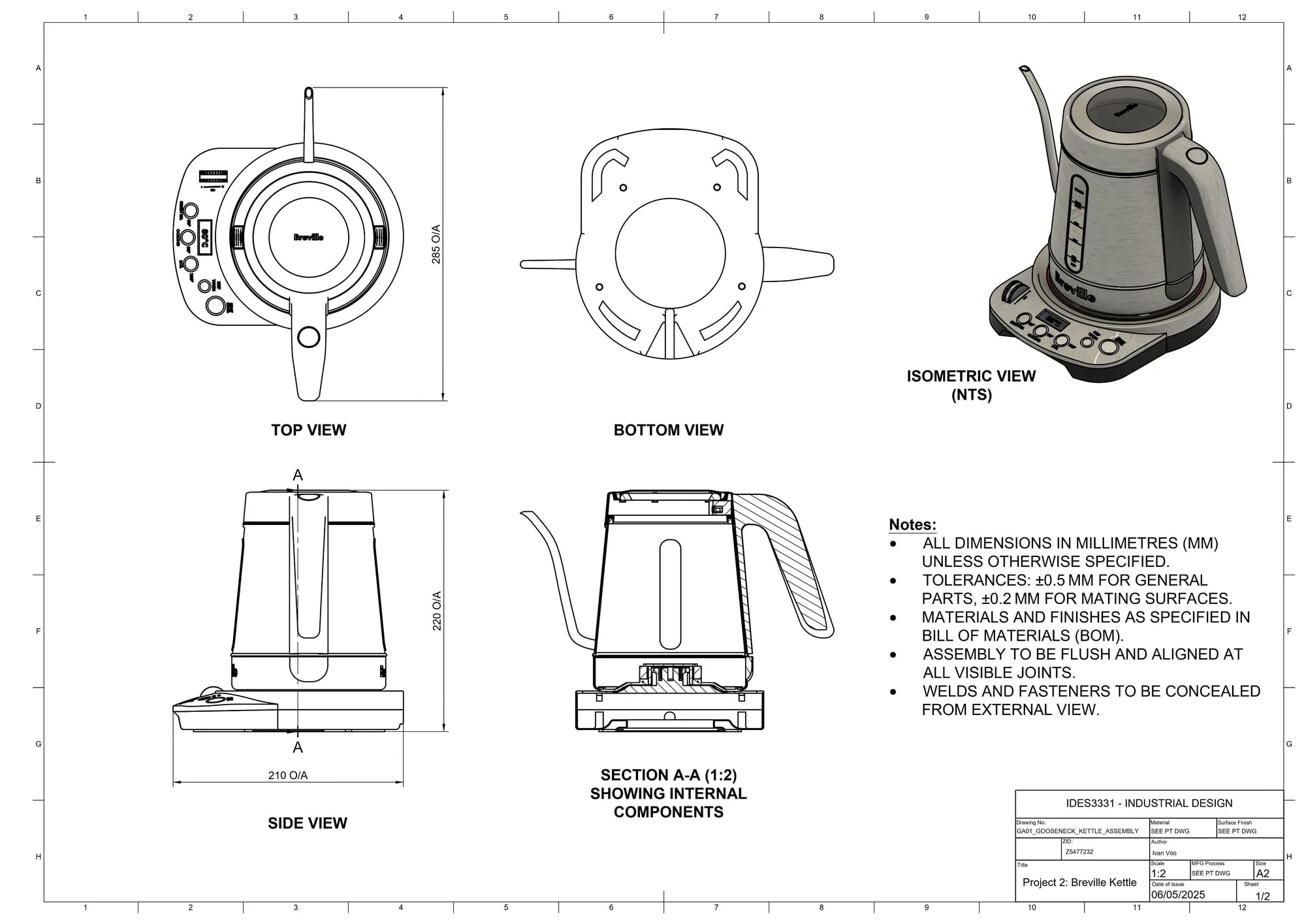
I tried brass first — too malleable — so the final is steel. The exit angle sits between 75 and 85°, with a10–25° downward pour angle from horizontal: a slow, steady stream that swirls water into sifted powder without splashing.
User testing
Two rounds. The first one hurt.
Round one
- “The button is too high”
- “Handle feels very bulky”
- “The dial is very generic”
- “Add some presets for convenience”
Round two
- “It feels very comfortable and easy to pour”
- “The button under the thumb feels natural”
- “The temperature precision is so useful”
- “The LED ring is very helpful”
Resolved
Precision meets tradition.
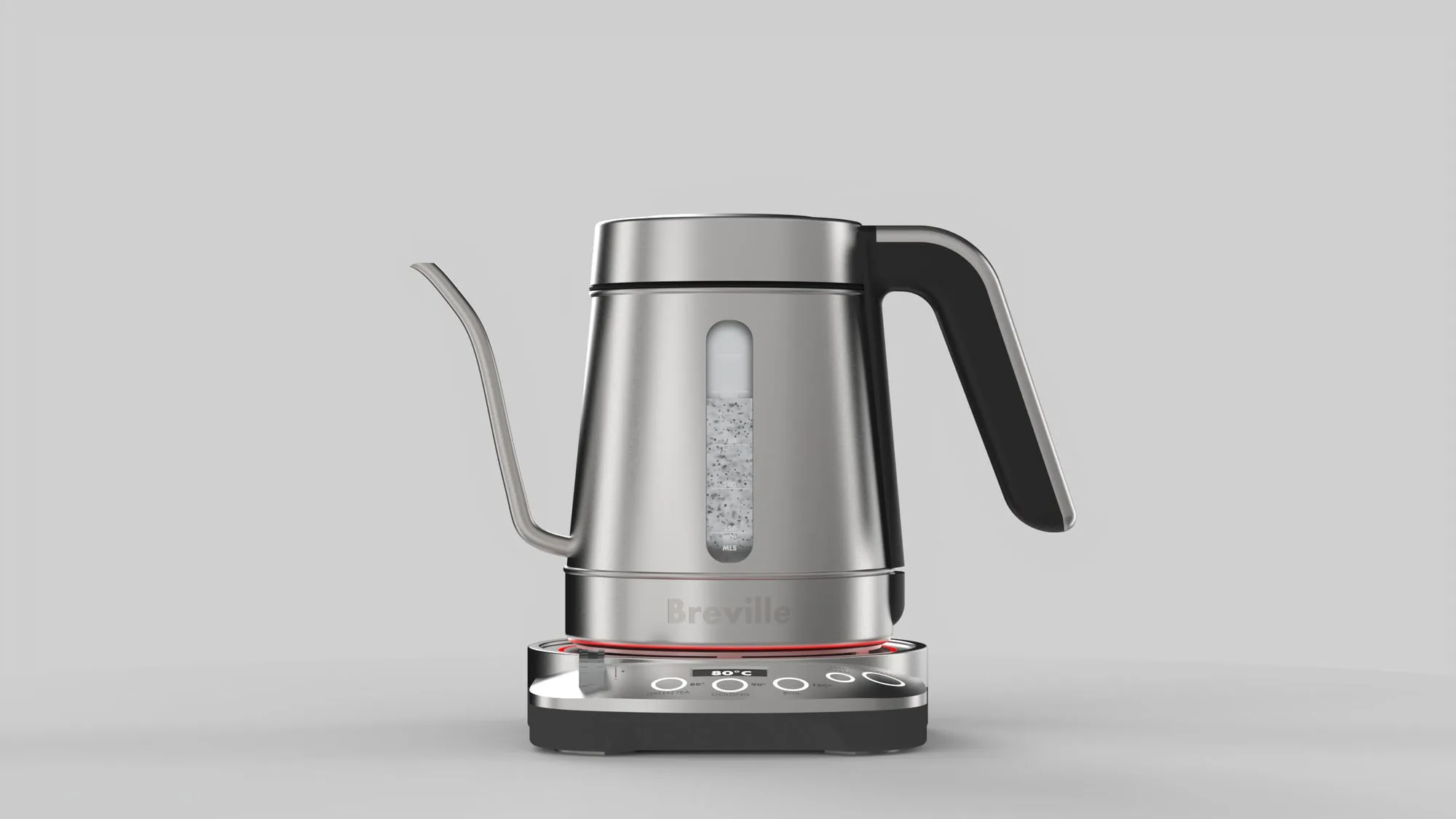
Effortless performance 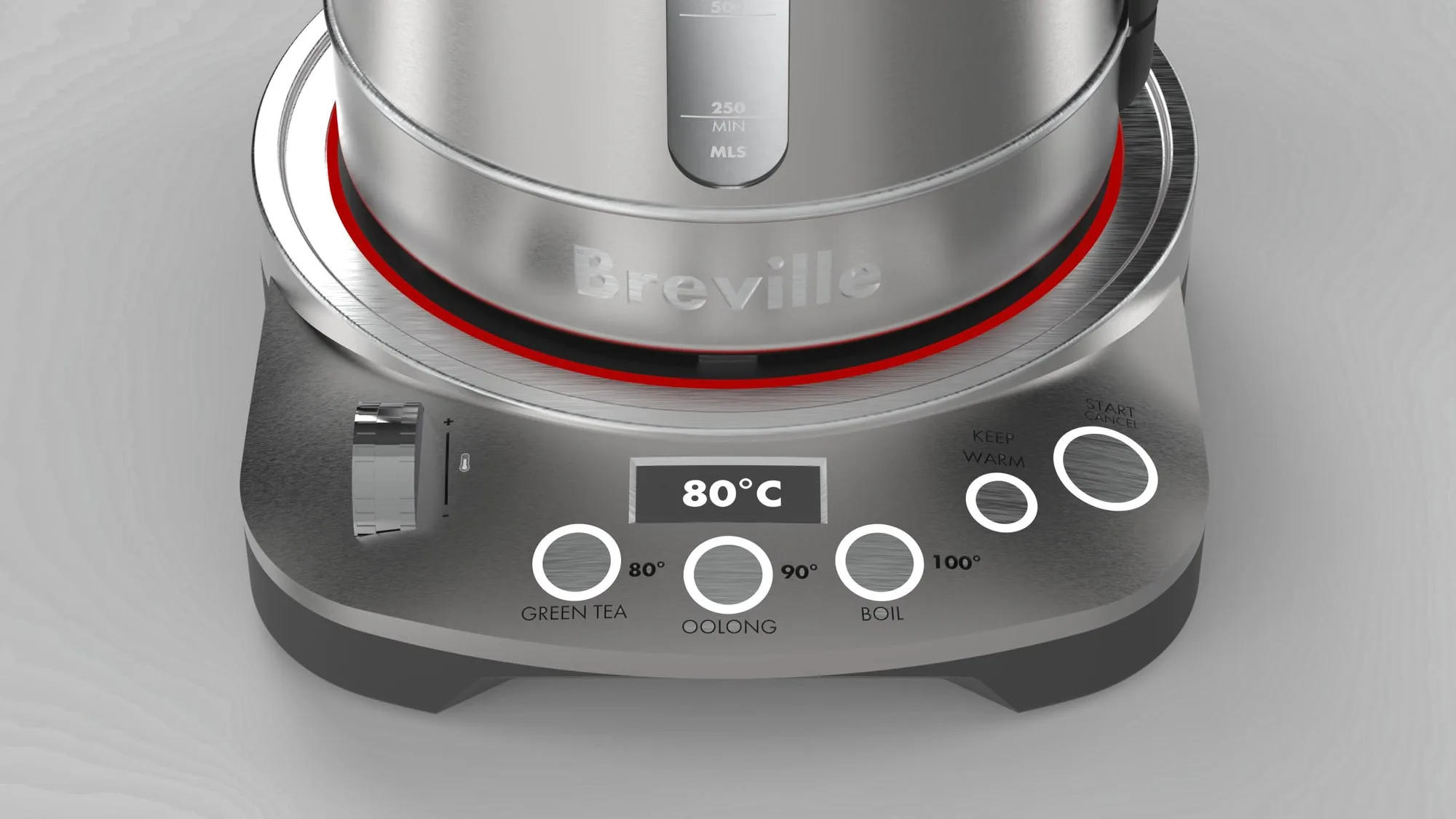
Temperature control to the degree 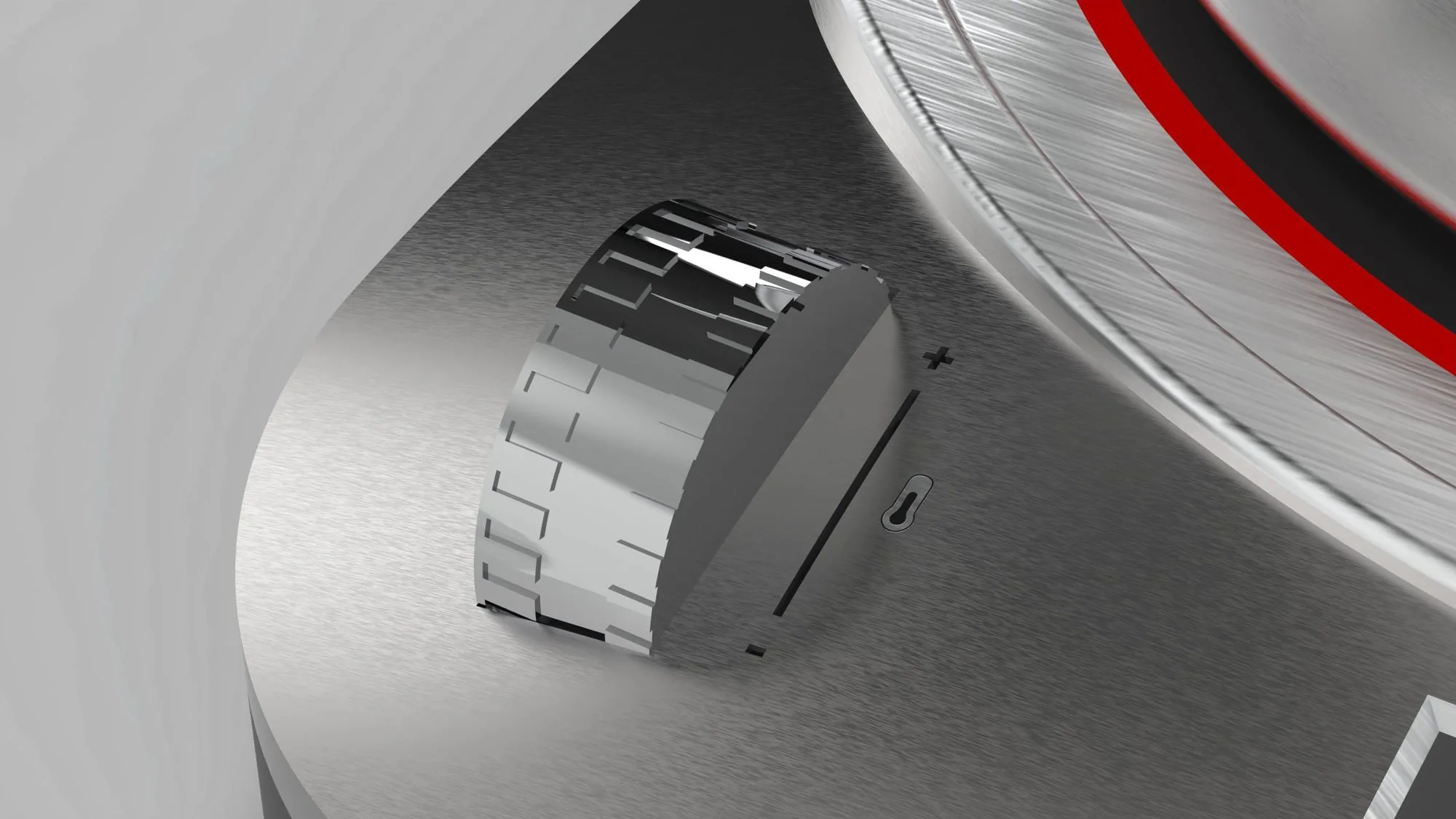
CNC-milled steel temp dial 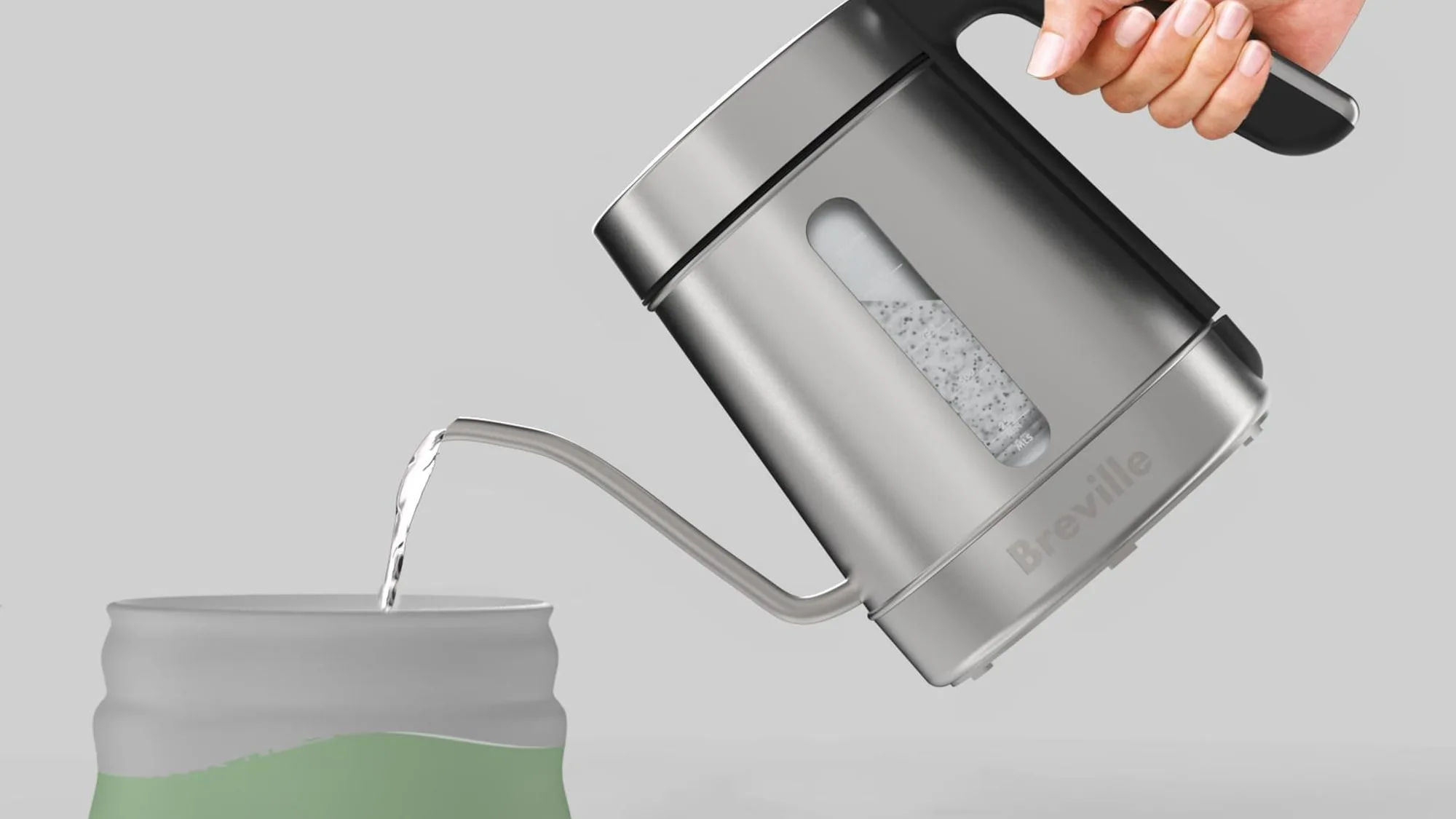
Precision you can pour
Appearance model
Made, not just rendered.
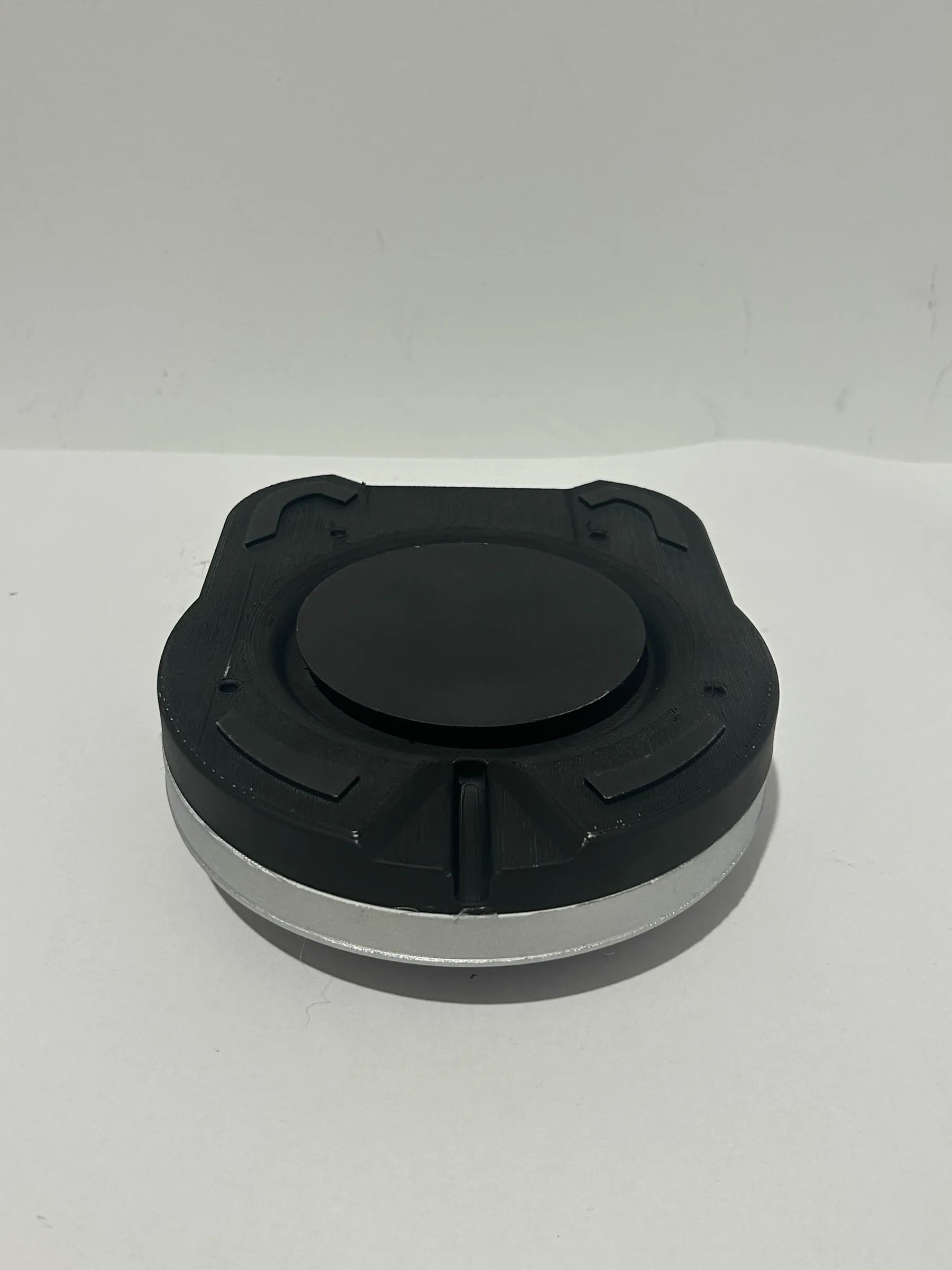
Bottom of base 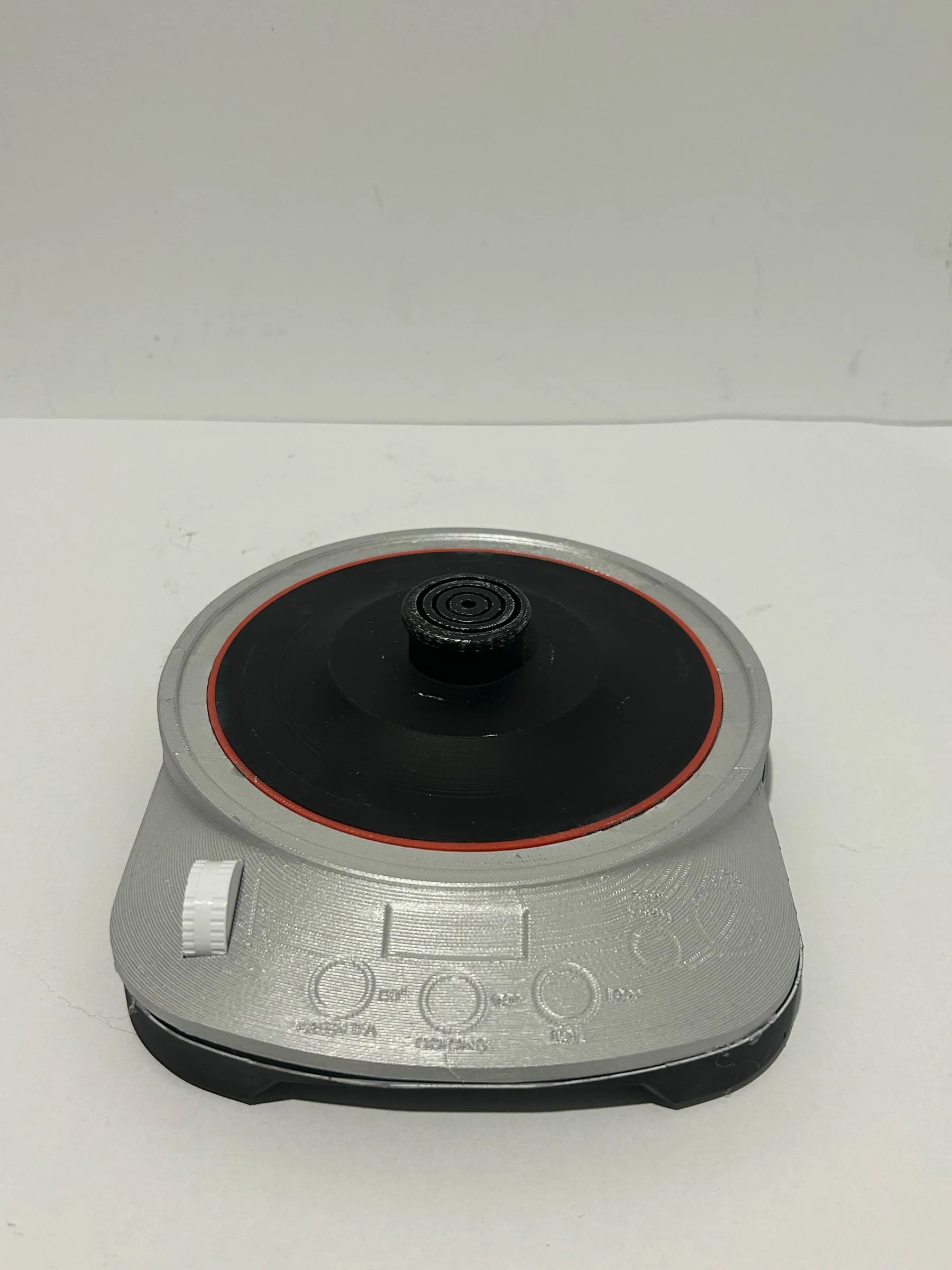
Base and controls 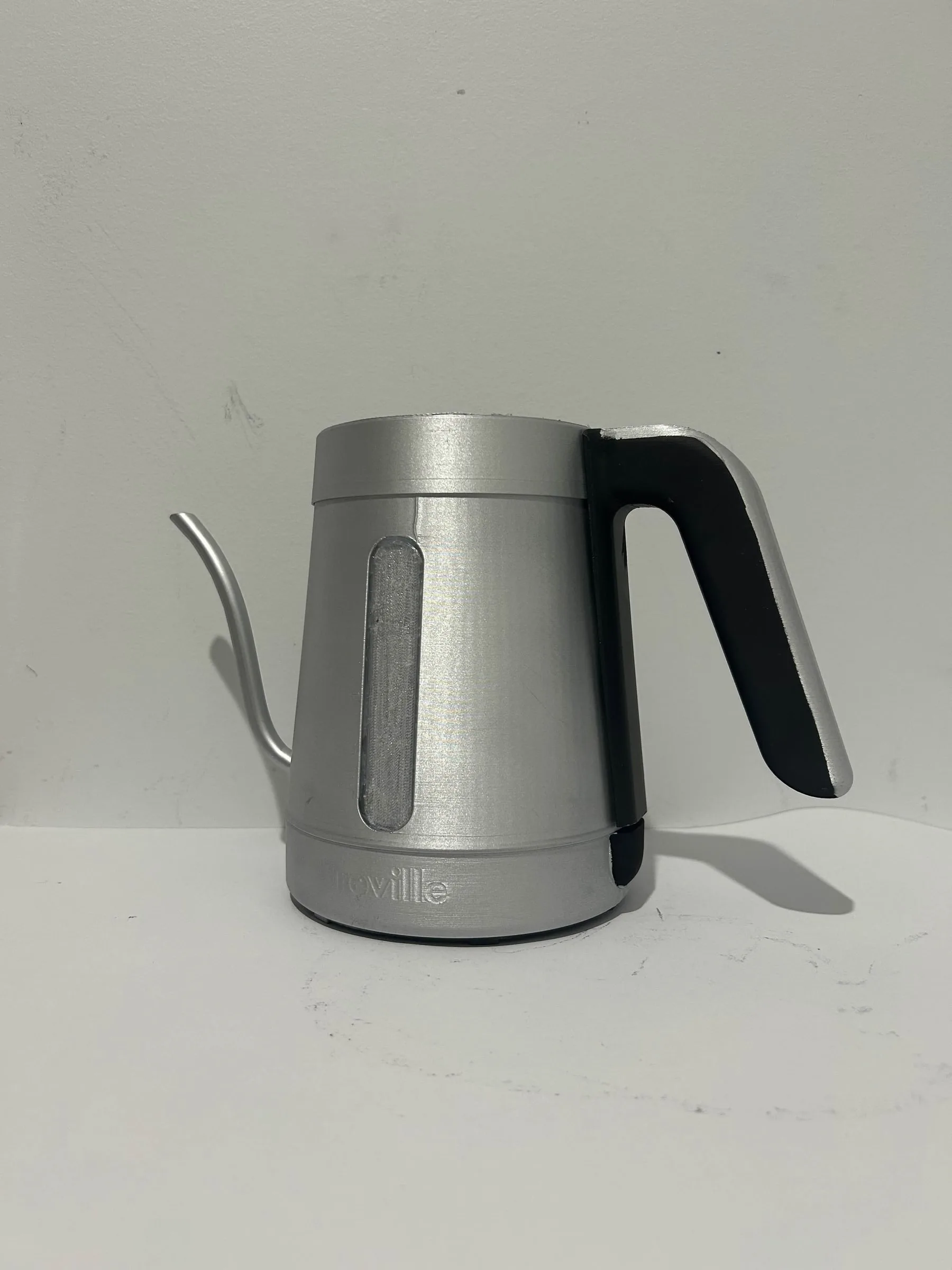
Kettle 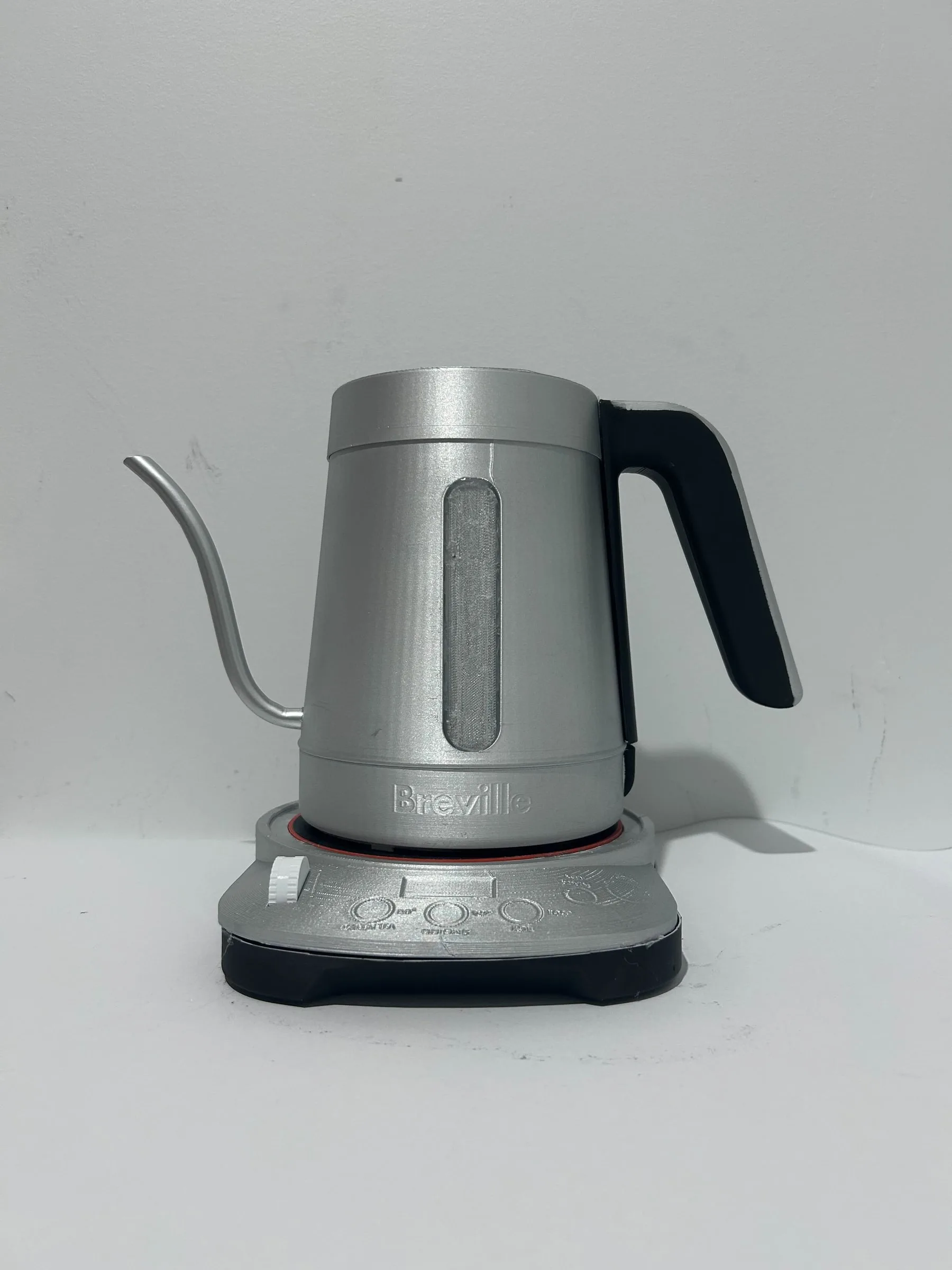
Kettle and base
Project specs
- Client brief
- Breville
- Heating range
- 60–100 °C, to the degree
- Dial
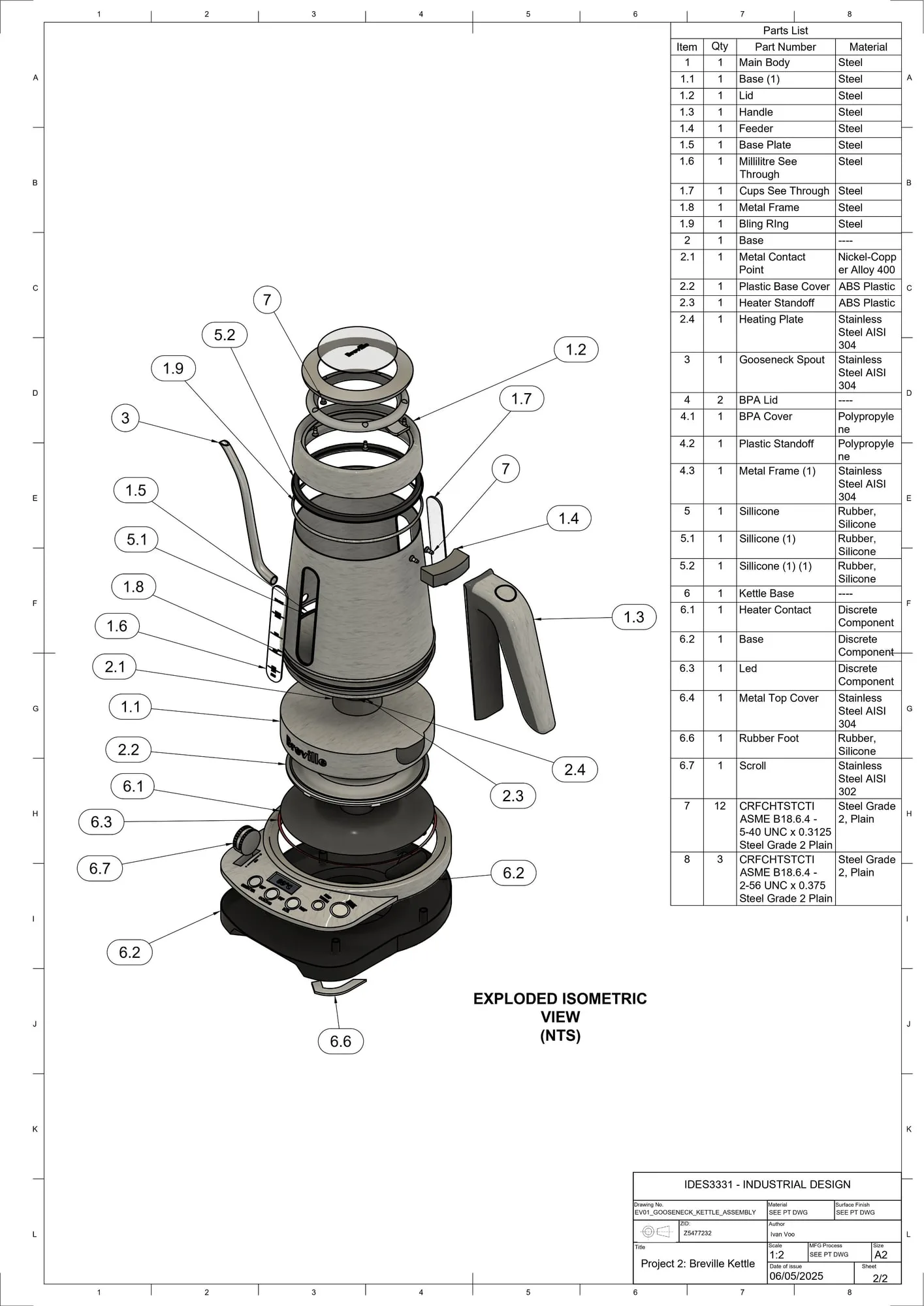
- CNC-milled steel
- Spout exit angle
- 75–85°
- Pour angle
- 10–25° below horizontal
- Lid
- Soft-open, damped hinge
Where it lands
Every complaint from round one came back as praise in round two.
The button sitting too high, the bulk of the handle, a dial people called generic, and the missing presets — those were the four things raised in the first round of testing. They were the four things people singled out in the second.
It stops at an appearance model: form, proportion and control layout resolved, nothing that heats water. The thermal design and the electronics are where this would have to go next, and that is the line between a concept and a product.