

Graduation project — 01
Shio 潮
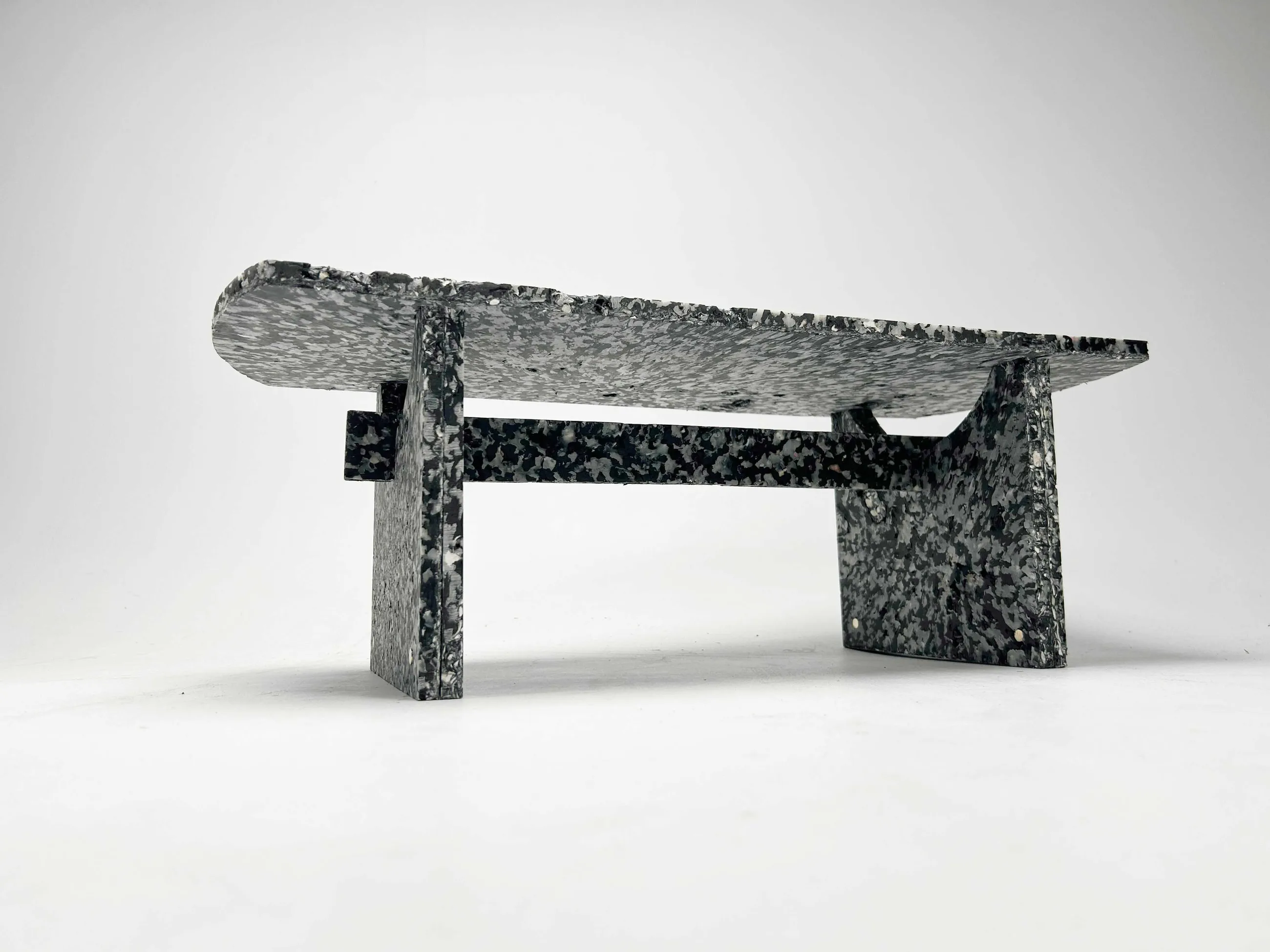
A modular public bench pressed from crushed oyster shell waste and recycled HDPE — asking what a discarded material is still capable of.
Where it started
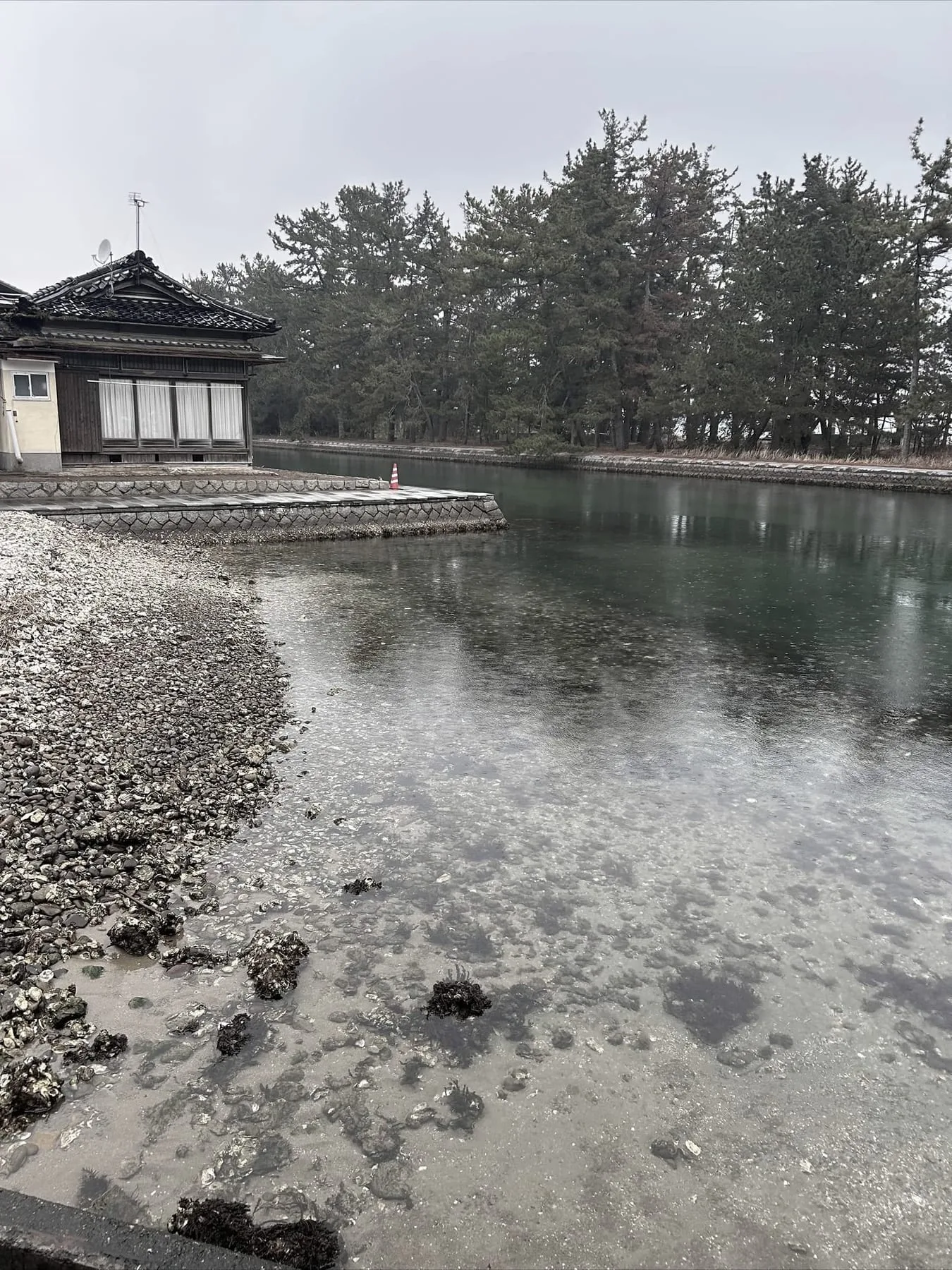
The idea came from a walk through Amanohashidate, Japan, past mounds of discarded oyster shell — a by-product with almost nowhere to go.
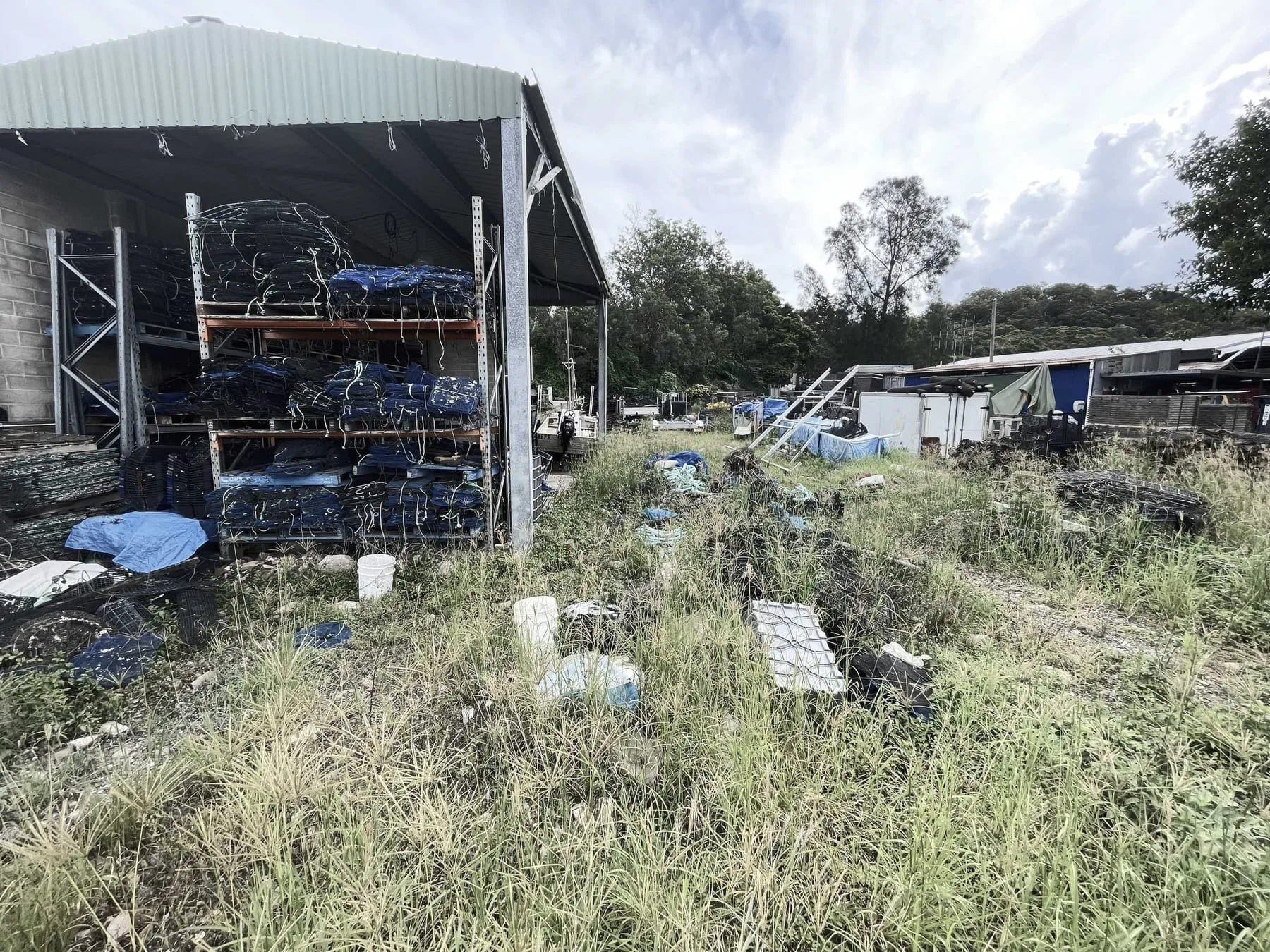
Back in Sydney, Broken Bay Pearl Farm became the source of the same problem at home: crushed shell waste with real structural potential, if it could be bound into something load-bearing.
Testing the composite
Fourteen tiles before one of them held.
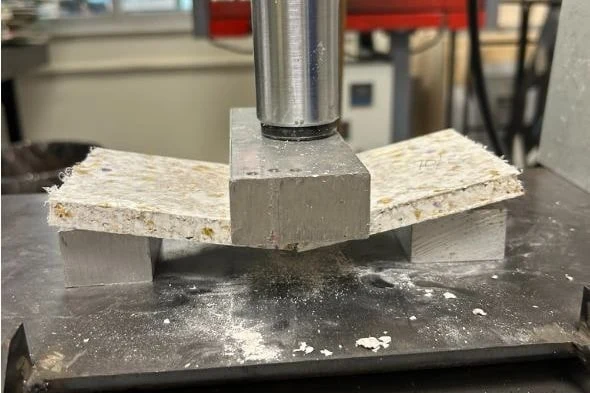
The whole project rested on a material that did not exist yet. Seven batches, each one pressed, labelled and broken under a three-point bend rig.
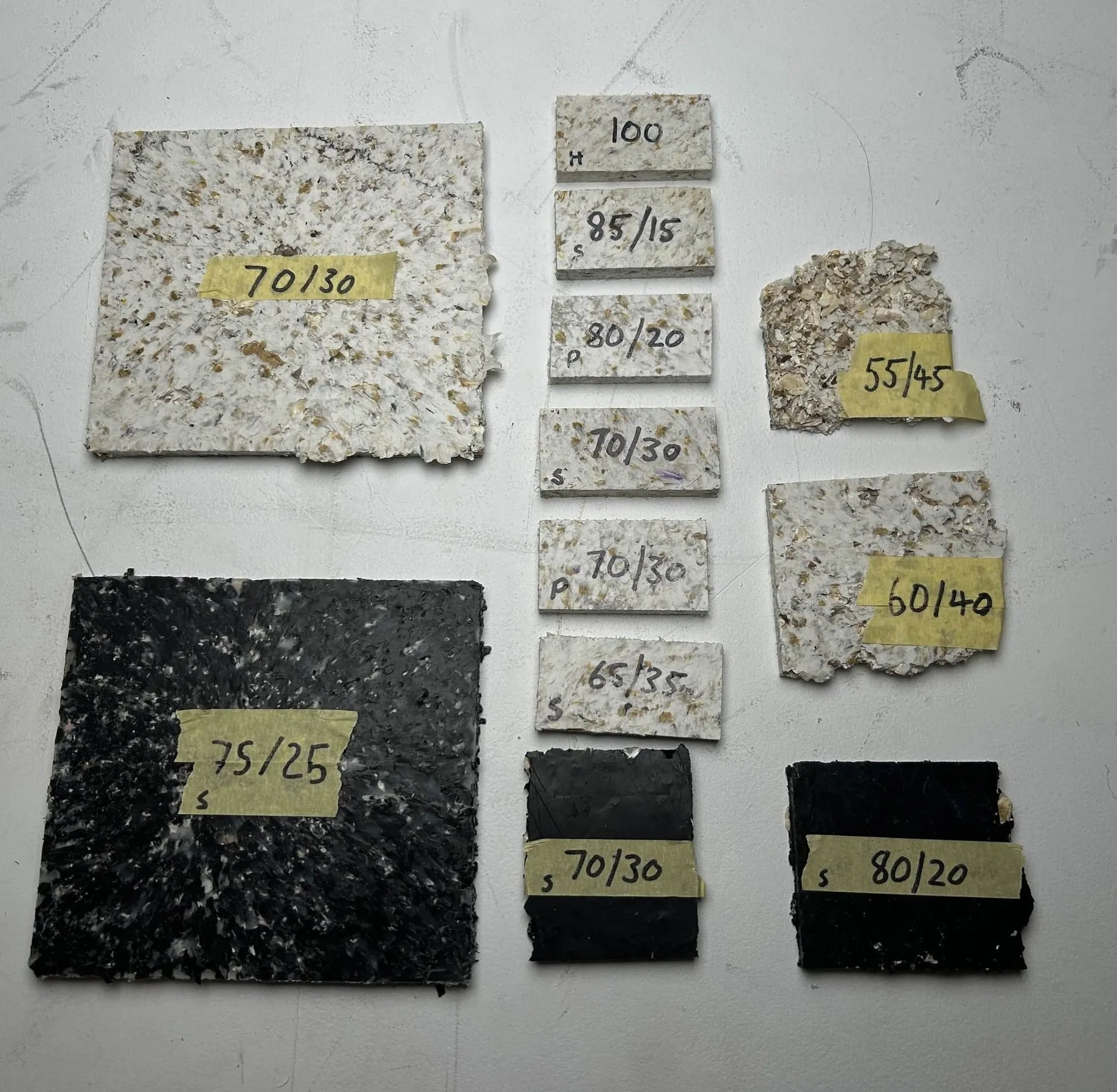
| Batch | Mix | Peak |
|---|---|---|
| 01 | HDPE + shell powderPowder would not bond — HDPE is hydrophobic, shell powder hydrophilic | — |
| 02 | 100 / 0 controlPure recycled HDPE, the benchmark to beat | 2750 |
| 02 | 85 / 15 crushedCrushed shell bonded where powder failed | 2250 |
| 03 | 80 / 20 powderFused on the surface, voids underneath | <750 |
| 03 | 70 / 30 powderBent by hand — no strength test needed | <750 |
| 04 | 65 / 35 pearl shellAkoya shell is aragonite, not calcite — less stable | <1550 |
| 04 | 70 / 30 pearl shellBrittle, but heat turned the surface gold | <1250 |
| 05 | 55 / 45 rock oysterToo little plastic to bind — decorative only | <1000 |
| 05 | 60 / 40 rock oyster40% is the ceiling for structural use | <1000 |
| 06 | 70 / 30 hand-groundInconsistent pellet size left air pockets | <750 |
| 07 | 70 / 30 controlledSame ratio, graded pellets — three times the strength | 2300 |
| 07 | 75 / 25 controlledStrongest result, and the marbled surface was an accident | 2500 |
Peak load in psi, three-point bend
Powder was the wrong instinct
Fine shell powder never bonded. HDPE is hydrophobic and shell powder is hydrophilic, so the powder sank or sat on the surface — tiles that looked fused blew apart under an air gun. Switching to crushed shell aggregate tripled the strength at the same ratio.
The shell species mattered
Akoya pearl shell is aragonite; rock oyster is calcite. The pearl tiles were the most beautiful — heat turned the surface a gold iridescence — and the most brittle. Aragonite is the less stable crystal, and the tiles snapped well under the benchmark.
Preparation beat ratio
Batch six and batch seven ran the same 70/30 mix. The first, ground by hand into uneven pellets, failed under 750 psi. The second, with graded pellet size and even distribution, held 2300. How the material was prepared mattered more than what was in it.
Form development
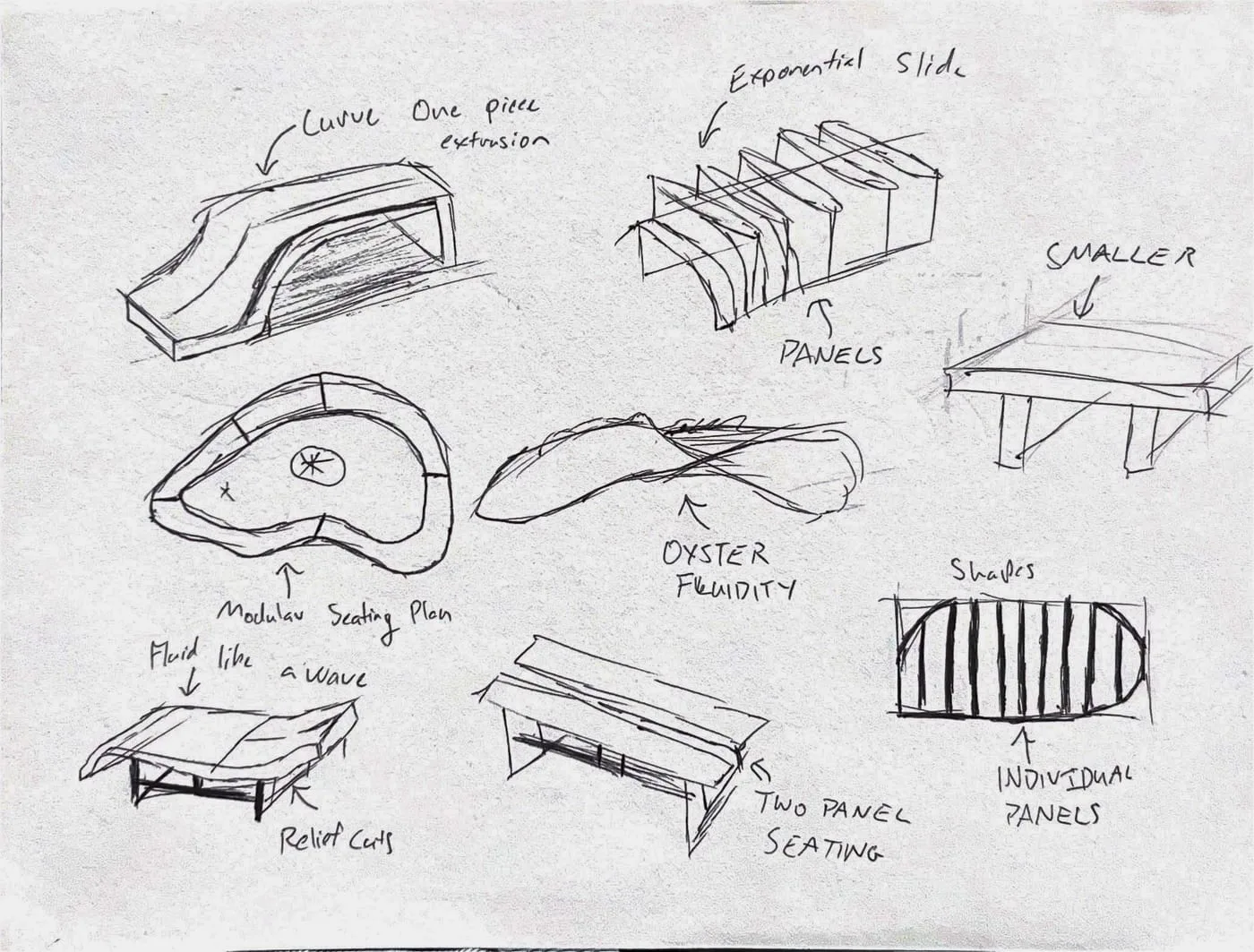
Finding a shape the press could actually make.
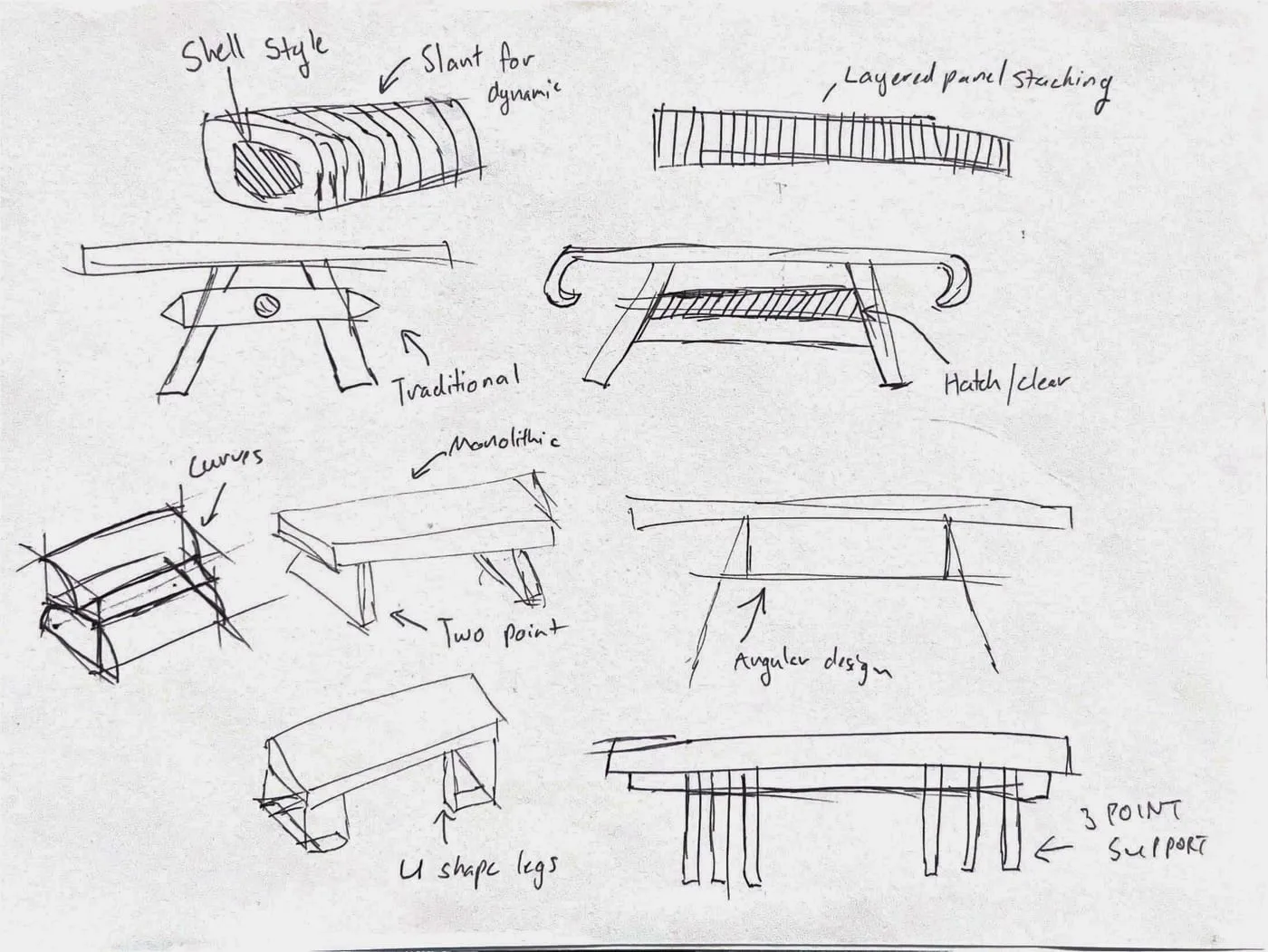
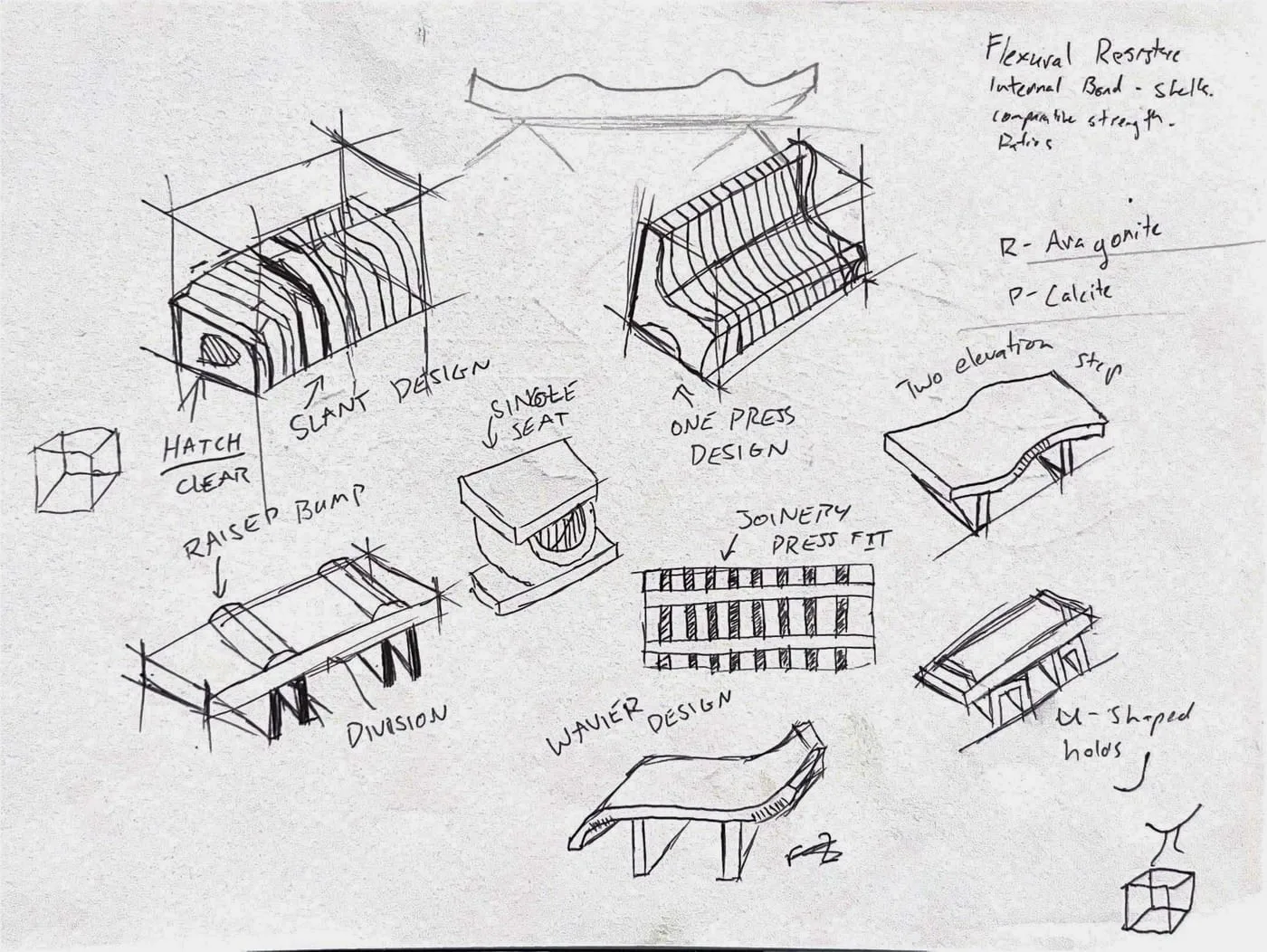
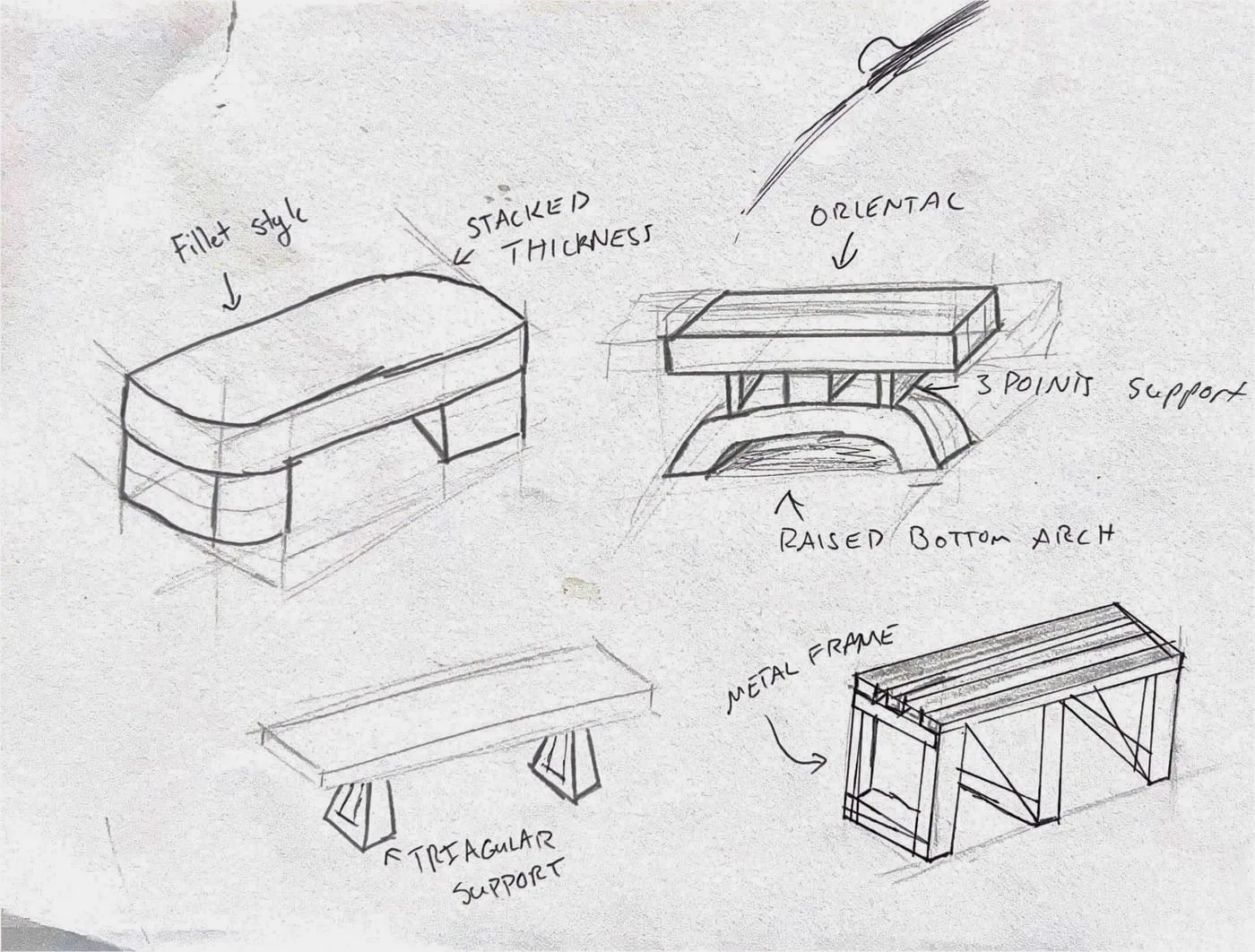
Developing the composite
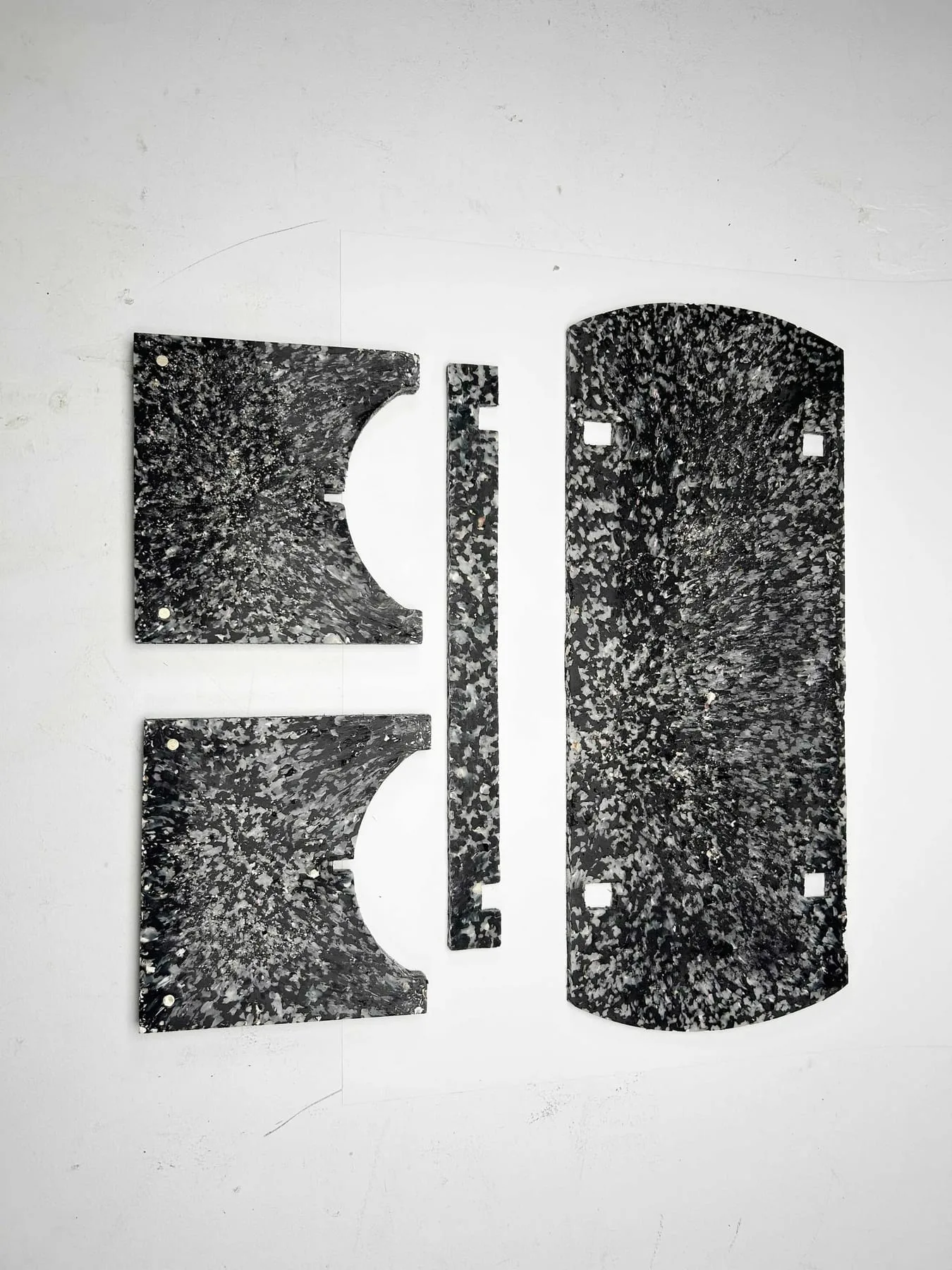
The bench is sheet-pressed from a 75/25 blend of recycled HDPE and crushed shell, engineered to a safety factor of 3 and tested well beyond that — to a safety factor of 10, reaching a compressive strength of roughly 2500 psi.
Because HDPE is usually sheet-pressed and CNC-cut, the shell introduced a new manufacturing constraint. With limited time I pivoted to framed final forms and experimented with sheet-pressing curved arcs — something rarely attempted, because they warp. The embedded shell surprised me: it stabilised the material and prevented the distortion.
Modularity meant the bench could be assembled, repaired and reconfigured in public without specialist tools.
The part that might not have worked
Nobody presses HDPE into a curve, because it warps.
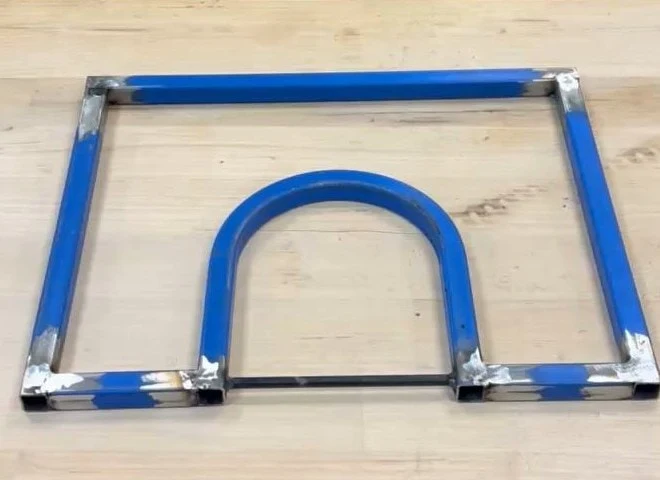
The form depended on curved panels, and sheet-pressed HDPE is known to shrink and pull out of shape as it cools. Rather than scale up a model that might not be manufacturable, the DFL staff and I built a single arc frame to test the principle first.
The frame had to be sandblasted before it went near the press. At 200 °C paint doesn't just burn and release fumes — it transfers onto the sheet.
It worked, and for a reason I hadn't predicted: the shell was doing the stabilising. The aggregate held the sheet against its own shrinkage and the arc came out of the frame true. The material I'd spent seven batches trying to make strong turned out to solve the forming problem too.
Project specs
- Composite ratio
- 75 / 25 HDPE–shell
- Compressive strength
- ~2500 psi at 10 mm
- Test method
- Three-point bend
- Engineered safety factor
- 3
- Held to
- 10 before bending, 15 before failure
- Panel thickness
- 20 mm
- Length
- 1200 mm — seats two
- Shell source
- Broken Bay Pearl Farm, NSW
- HDPE source
- Broken Bay Pearl Farm — discarded baskets
- Form
- Modular public bench, 1:2 scale model
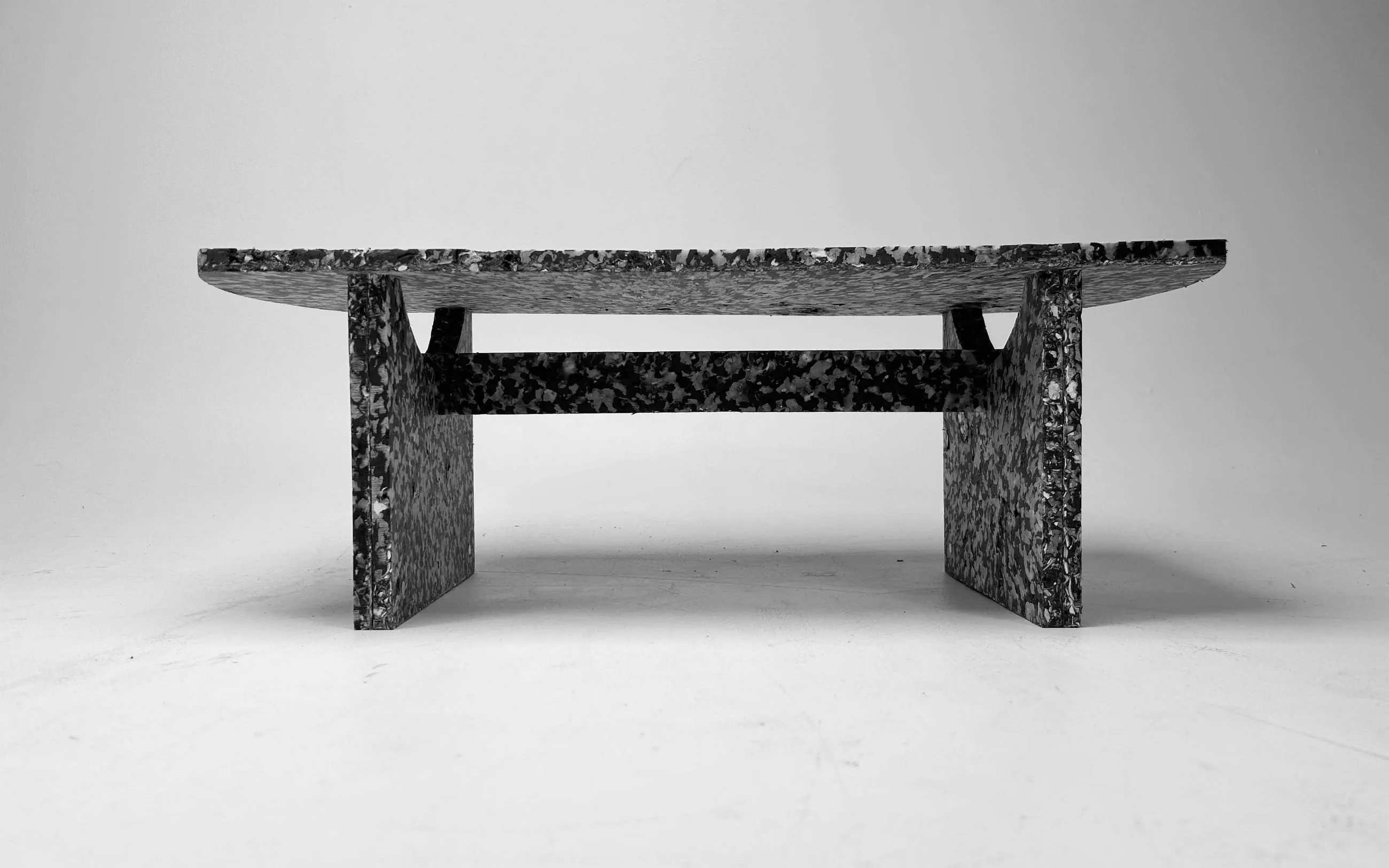
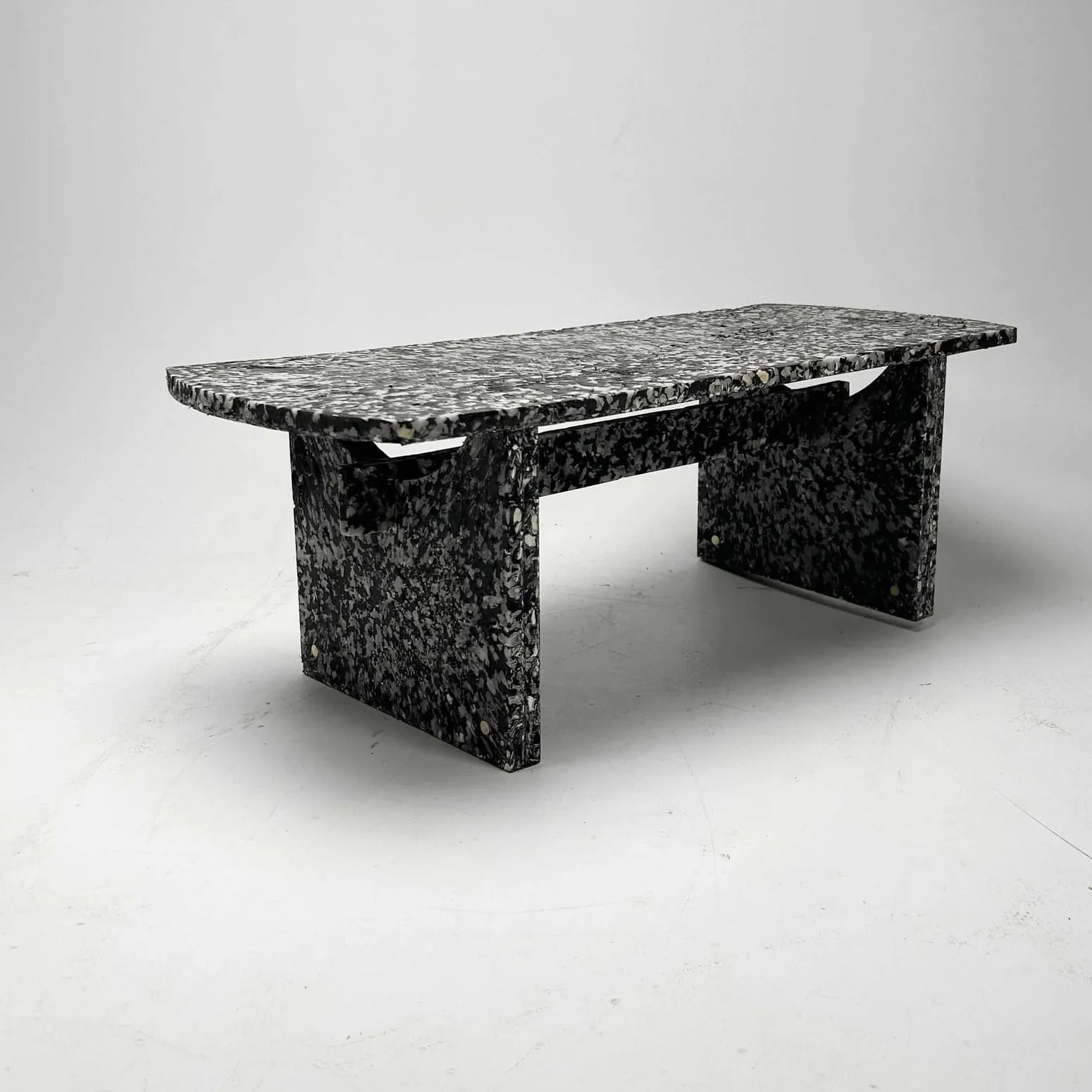
Exhibited at BEGradEX, White Bay Power Station
Where it goes next
The joinery is still the open problem.
The panels press cleanly. Joining them afterwards without mechanical fixings is the part I have not solved — the brass here is a working answer, not the intended one.
Three directions worth testing: bio-based adhesives, interlocking geometry cut into the panel edges, and connectors set into the sheet during the press.